
 English
 Español
 عربى
عربى Türk
Türk
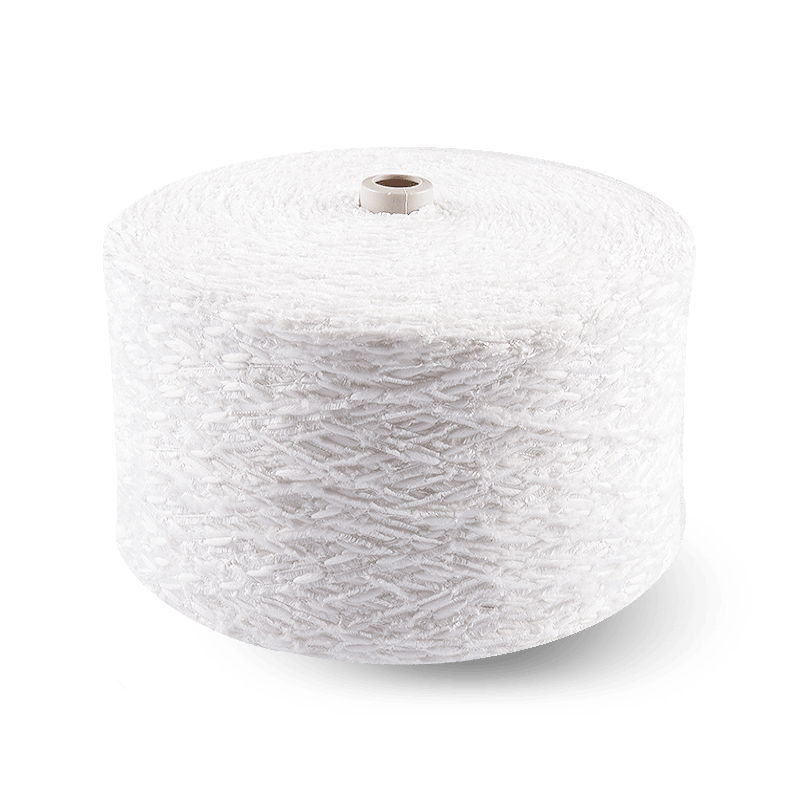
Loop yarn is a kind of fancy yarn, generally composed of core yarn, pressure yarn (sometimes also ca...

 2026.04.28
 Industry News
Content
Chenille yarn has a reputation that precedes it — the impossibly soft, velvety texture that makes finished projects feel luxurious against the skin and look visually rich in a way that standard spun or plied yarns simply cannot replicate. Yet for all its sensory appeal, chenille also has a well-earned reputation for being technically demanding. It sheds, it worms, it can be difficult to see stitches in, and it behaves very differently from conventional yarn in ways that catch new and experienced crafters off guard alike. Understanding what chenille yarn actually is, how it is made, how different fiber contents and constructions affect its behavior, and how to work with it effectively across different craft disciplines is the difference between a project that showcases the yarn's qualities and one that ends in frustration. This guide covers the technical and practical dimensions of chenille yarn comprehensively, with specific guidance for knitters, crocheters, and weavers.
The word chenille comes from the French word for caterpillar — an apt description of the yarn's fuzzy, segmented appearance. Unlike conventional yarn, which is produced by twisting or plying fibers together into a continuous strand, chenille is manufactured through a weaving and cutting process that creates its characteristic pile structure.
In production, short lengths of fiber — the pile — are woven at right angles between two core threads, which are then twisted together to trap and secure the pile fibers, causing them to project outward from the core in all directions. This creates the caterpillar-like structure: a twisted central core with a dense radial pile that gives the yarn its soft, velvety surface and its round, plump cross-section. The length of the pile fibers and the density with which they are packed around the core determine the yarn's thickness, softness, and drape characteristics.
This manufacturing method has direct consequences for how chenille behaves in use. Because the pile fibers are mechanically trapped rather than chemically bonded or spun into the core structure, they are susceptible to shedding — particularly during the initial knitting or crocheting process and in the early washes of finished items. The same construction also makes chenille vulnerable to worming, where sections of the yarn twist and bunch into dense, rope-like clusters rather than lying smooth, particularly when used in knitted fabric where the yarn is subject to twisting forces during stitch formation.
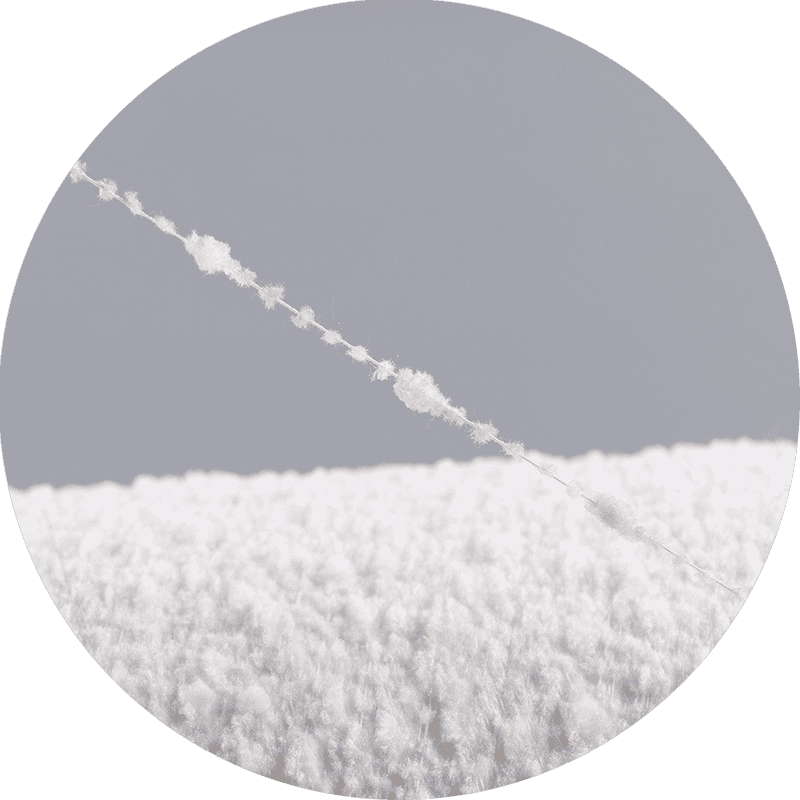
Chenille yarn is produced in a wide range of fiber contents, each with distinct characteristics that significantly affect how the yarn handles, how the finished fabric feels, and how the item performs in long-term use. The fiber choice is not merely a matter of softness or price — it determines washability, durability, pile retention, and suitability for different end uses.
Cotton chenille is the most practically versatile fiber choice for chenille projects intended for regular washing and direct skin contact. Cotton is naturally hypoallergenic, breathes well, and can be machine washed without the pile matting or the core shrinking excessively when appropriate washing temperatures are used. It is the standard choice for baby items, towels, bathrobes, dishcloths, and home accessories where hygiene and durability are priorities. Cotton chenille tends to have a slightly less soft initial hand than acrylic or viscose versions, but it softens with repeated washing. It also holds its pile structure more reliably over time than viscose-based chenille, making it the most practical choice for items that will see frequent use.
Acrylic chenille dominates the mass-market craft yarn segment, offering the softness and visual appeal of chenille at the lowest possible price point with the easiest care requirements. Modern acrylic chenille yarn, particularly microfiber acrylic versions, can be extraordinarily soft — often marketed as "velvet yarn" or "velour yarn" — and is machine washable and tumble dryable in most cases. The primary weaknesses of acrylic chenille are pilling over time as the acrylic pile fibers break and tangle, and a tendency to retain body heat poorly compared to natural fiber alternatives, making it less comfortable for wearable items in warmer climates. For home decor items — cushion covers, blankets, wall hangings, and decorative baskets — acrylic chenille is a highly practical and cost-effective choice.
Viscose (rayon) chenille produces the most intensely lustrous and drape-forward of all chenille varieties. The semi-synthetic fiber reflects light with a silky sheen that acrylic and cotton cannot replicate, and the finished fabric has an exceptionally fluid drape that makes viscose chenille the preferred choice for woven scarves, shawls, garment fabric, and decorative textiles where visual richness and movement are the design priorities. The practical challenges of viscose chenille are significant: it is typically hand-wash or dry-clean only, it loses considerable strength when wet, it is prone to shedding during weaving or knitting, and it can develop a crushed, matted appearance in areas of frequent contact or pressure. These limitations make viscose chenille most appropriate for display items, occasional-wear garments, and woven fabric rather than everyday household textiles.
Silk chenille is the premium end of the market — extraordinarily lustrous, with a depth of color and surface quality that no other fiber achieves. It is used almost exclusively in high-end woven textiles and fashion applications, and its cost places it firmly outside the mainstream craft yarn market. Wool chenille combines the warmth and elasticity of wool fiber with the pile construction of chenille, producing a yarn with excellent thermal properties and better elasticity than cotton or acrylic versions — a useful characteristic in knitting where some stitch definition and recovery is required. Wool chenille requires careful washing (cool water, wool detergent, no agitation) to prevent felting but rewards that care with a warmth-to-weight ratio and natural fiber comfort that synthetic alternatives cannot match.
Chenille yarn is produced across a full range of weights, from fine weaving yarn through to chunky arm-knitting weights. Matching yarn weight to the project type and the craft technique used is essential for achieving the intended result.
| Yarn Weight | Typical Diameter | Recommended Needle/Hook Size | Best Applications |
| Lace / Fine | 1 – 2 mm | 2 – 3 mm | Woven scarves, fine woven fabric, embroidery accent |
| Sport / DK | 3 – 4 mm | 3.5 – 4.5 mm | Baby garments, lightweight shawls, woven towels |
| Worsted / Aran | 4 – 6 mm | 5 – 6 mm | Sweaters, cushion covers, blankets, hats |
| Bulky | 6 – 9 mm | 6 – 8 mm | Chunky blankets, scarves, home decor baskets |
| Super Bulky / Jumbo | 10 mm+ | 10 – 15 mm or arm knitting | Arm-knit blankets, wall hangings, large-scale decor |
Knitting with chenille requires adapting both your technique and your project expectations. The yarn's pile structure obscures stitch definition almost completely — the beautiful texture of cables, lace, and intricate colorwork is invisible in chenille fabric, making those techniques wasted effort at best and frustrating failures at worst. Chenille knitting is most successful with simple stitch patterns where the yarn's surface quality is the visual element, not stitch architecture.
The most knitter-friendly approach for chenille is stockinette, reverse stockinette, simple rib, and seed stitch. These patterns allow the velvety pile to sit uniformly on the fabric surface without the tight twist angles that cause worming. When worming does occur — the yarn coiling into rope-like sections between stitches — it is most often caused by too-tight tension combined with yarn that is being over-twisted during stitch formation. Loosening your tension, using needles one to two sizes larger than the label recommendation, and ensuring the yarn feeds freely from the ball without restriction reduces worming significantly.
Stitch visibility is the second major challenge. Because chenille pile masks the individual loops of each stitch, counting stitches, identifying dropped stitches, and reading the fabric to track pattern repeats requires close attention and good lighting. Using stitch markers at regular intervals — every 10 to 20 stitches — and counting rows with a row counter rather than attempting to count from the fabric itself makes the process considerably less error-prone.
Crochet is generally considered more forgiving than knitting for chenille yarn, primarily because crochet stitches are individually completed and locked before moving to the next, reducing the worming that is driven by knitting's twisting stitch formation. However, many of the same considerations apply: simple stitches outperform complex ones, and stitch visibility requires focused attention.
Single crochet produces the densest, most structured fabric from chenille — ideal for amigurumi, baskets, and home accessories where firmness is desired. Half-double and double crochet create a more open, draped fabric suitable for garments and blankets. The moss stitch (alternating single crochet and chain stitches) creates an attractive textured surface that works particularly well with chenille because the chain spaces add visual rhythm without requiring stitch definition that the pile would obscure.
Hook selection matters significantly with chenille. Smooth-shafted aluminum or steel hooks allow the yarn to slide freely without the pile catching, which reduces splitting and maintains a cleaner stitch formation. Hooks with a pronounced inline or tapered throat help the hook enter the stitch without pushing the pile fibers into the stitch gap, which is a common cause of split stitches in chenille crochet. Ergonomic rubber-grip hooks are comfortable for extended sessions but can create slightly more friction with the pile than bare metal — personal preference and experimentation determine which works best for individual crafters.
Weaving is arguably the craft for which chenille yarn was originally most widely used, and it remains the context in which chenille's qualities are most fully expressed. In a woven structure, the chenille yarn lies flat without the twisting forces of knitting or crochet, which eliminates worming entirely and allows the pile to bloom uniformly across the fabric surface. Woven chenille fabric has a richness and depth that rivals velvet, with the additional advantage of being home-produced on a rigid heddle or floor loom.
When using chenille as weft on a rigid heddle or floor loom, a firm plain weave or twill structure produces the most stable fabric. The sett — the number of warp ends per inch — should be calculated based on the warp yarn diameter rather than the chenille weft, since the weft's pile will compress between the warp threads. A slightly more open sett than the warp yarn alone would require allows the chenille pile to bloom fully between warp threads, creating the characteristic smooth, velvety surface of woven chenille.
Woven chenille scarves are among the most popular applications: warp a rigid heddle loom with fine cotton or silk yarn, weave with a viscose or cotton chenille weft, and the finished scarf has a fluid drape and sensuous surface that showcases the yarn's best qualities. Wet finishing — washing the woven piece gently in warm water — causes the chenille pile to bloom further and the structure to set, transforming a somewhat stiff off-the-loom piece into a beautifully soft finished textile.
The long-term appearance of a chenille project depends heavily on how it is cared for from the first wash onward. Incorrect washing — particularly agitation or high heat — causes the pile to mat, the core to shrink unevenly, and the finished item to develop a crushed, worn appearance that is difficult to reverse.
Chenille yarn rewards crafters who take the time to understand its specific characteristics — both its extraordinary tactile and visual qualities and the technical demands it places on technique, stitch selection, and finishing care. Projects chosen to complement the yarn's strengths rather than fight its limitations consistently produce results that justify chenille's special status in the craft yarn world: few materials deliver the same combination of visual luxury, sensory softness, and design impact that a well-executed chenille project achieves.


Copyright © Tongxiang Xinsili Textile Co., Ltd. All Rights Reserved. Wholesale High Filament DTY Yarn Manufacturers
