
 English
 Español
 عربى
 Türk
Loop yarn is a kind of fancy yarn, generally composed of core yarn, pressure yarn (sometimes also ca...

 2026.11.24
 Industry News
Content
Crochet fancy yarn lives in an interesting corner of the textile world. For a crafter it is the skein that turns a plain scarf into something with real texture. For a fabric mill it is a bulk input that has to behave identically in every container. We sit on the manufacturing side of that line: Tongxiang Xinsili Textile Co., Ltd., a polyester yarn mill in Dama Town, Tongxiang, Zhejiang, a town the industry knows as China's sofa fabric town and which sits on the bank of the Grand Canal. We have been spinning differentiated polyester yarns since 2004, and much of what leaves our floor today is the kind of novelty yarn that crochet and knitting buyers are looking for.
Most people who type that phrase into a search bar are not shopping for a single ball of yarn. They are usually a fabric mill, an importer, a home-textile brand or a craft-supply company looking for a factory that can produce novelty yarn in commercial quantities, repeat the same shade next season and answer technical questions directly. That is a different job from what a retail yarn brand does, and it is the job we have been doing for two decades.
In our vocabulary, fancy yarn simply means a yarn whose appearance is engineered rather than left plain. The base may be ordinary polyester, but the structure, whether loops, pile, fuzz, bristles or slubs, is what the buyer is really paying for. Crochet is an unforgiving test of that structure, because crochet stitches hold their shape and expose the yarn surface far more than a flat weave does. A loop that looks charming in a swatch can look untidy in a finished blanket, so consistency counts for more than novelty alone. Our own notes on crochet fancy yarn as a trendsetter in crafting and fashion look at how quickly that demand has grown.
Novelty yarn is not one process. It is a series of decisions, and each one changes how the finished yarn behaves in a crochet hook or on a knitting machine.
Almost everything we make begins as polyester. Depending on the target hand feel, the base might be a DTY low-elasticity yarn, an imitation linen or imitation cotton yarn, or a high-shrinkage fibre blend. These bases are chosen for how they take colour, how they shrink during finishing and how much bulk they keep after heat setting. A feather yarn built on a stiff base will feel scratchy; the same structure on a softer base becomes light and airy. Getting the base right is most of the work.
Once the base is set, the decorative structure is created mechanically. Loop yarns are formed by wrapping a effect thread around a core at controlled tension so the loops sit evenly along the length. Chenille is built differently, with a pile of short fibres held between twisted cores and then cut to give that dense, velvety surface. Centipede-like yarns use short fibre sections spaced along the core, while toothbrush yarn pushes fibres out perpendicular to the core so the yarn looks like bristles. Crochet knitting machines and hollow-spindle frames each leave a different fingerprint, and the same recipe can produce very different results if tension or speed drifts.
Colour can enter the yarn at two very different points. Package dyeing colours the yarn after it is spun, which is flexible but adds a wet process and some risk of shade variation between lots. Dope dyeing, also called solution dyeing, puts the pigment into the polymer before the fibre is extruded, so the colour is part of the filament itself. Dope-dyed yarns tend to hold their shade through washing and light exposure, use far less water downstream, and stay consistent from batch to batch. For upholstery, outdoor textiles and any programme where colour matching is strict, that difference is usually worth paying for.
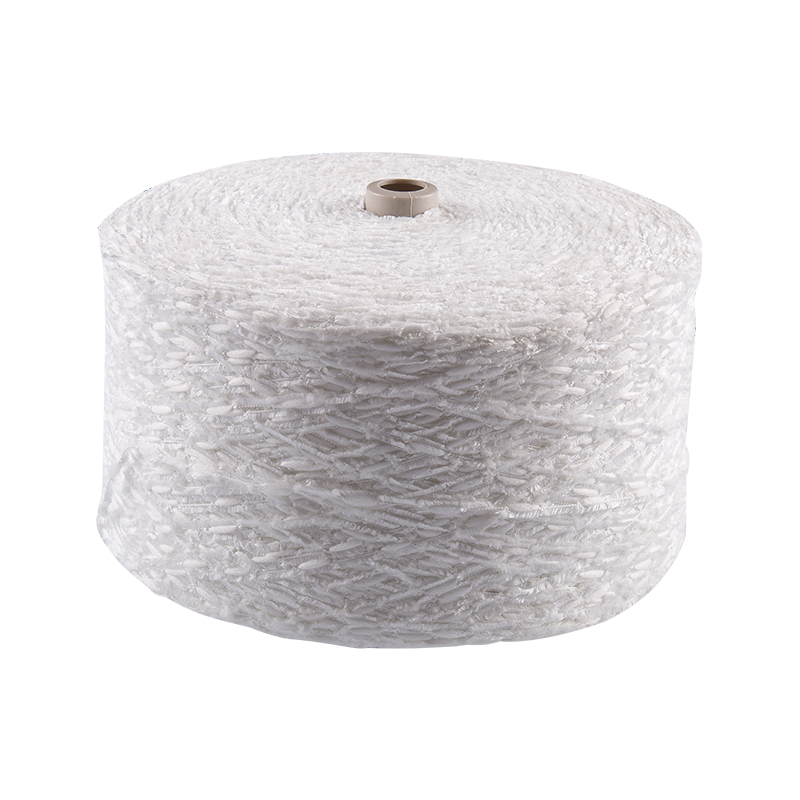 Crochet Fancy Yarn for Textured Handmade ProjectsWholesale crochet yarn suited to complex patterns, adjustable texture and quick small projects such as accessories, blankets and cushions.View Product →
Our range has grown around the needs of upholstery weavers, home-textile producers and accessory makers. The table below is a simplified map of the families we spin most often, and how their surface character usually translates into finished goods.
| Yarn family | Surface character | Typical use |
|---|---|---|
| Chenille and chrysanthemum yarn | Dense cut pile, soft velvety hand | Sofa fabric, curtains, cushions |
| Centipede-like yarn | Spaced fibre sections along a firm core | Decorative fabric, trims, craft work |
| Feather yarn | Fluffy tufts, light and airy | Knitwear, scarves, surface accents |
| Toothbrush yarn | Bristles standing out from the core | Textured fabric, novelty accessories |
| Double-faced velvet crochet yarn | Velvet touch on both faces | Two-sided fabric, blankets, garments |
| Loop and boucle yarn | Even loops along the length | Upholstery, coats, hand crochet |
| Dope-dyed polyester yarn (1250D) | Solid built-in colour, strong and even | Outdoor fabric, upholstery, industrial cloth |
| Dope-dyed loop yarn | Loops combined with solution-dyed colour | Sofa fabric, fashion fabric |
Two of these deserve a closer look. Chrysanthemum yarn is a chenille variant whose fibre ends open like petals, which is what gives it that generous, rounded softness in upholstery. Feather yarn is at the opposite end of the scale: light, slightly hazy, and popular wherever a designer wants texture without weight. Both can be tuned in pile length, fibre denier and colour depth, which is why we usually ask for a sample or a reference swatch before quoting.
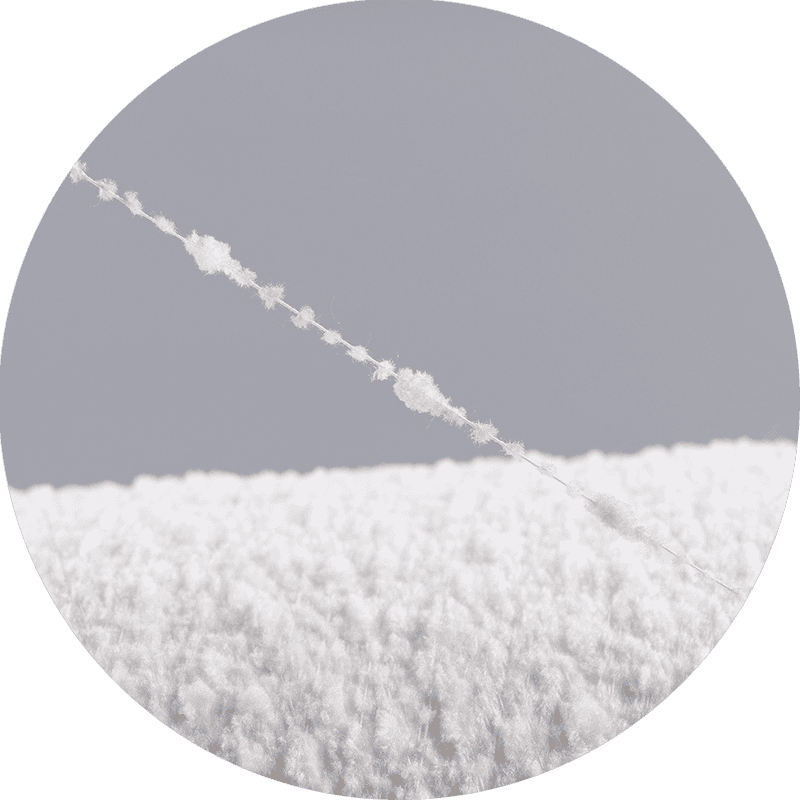 Chrysanthemum Yarn for Soft Decorative TexturesA petal-like fancy yarn with rounded softness, suited to decorative knitwear, crochet crafts and interior accents.View Product →
If you are comparing suppliers, the answers to these questions tell you more than a price list will.
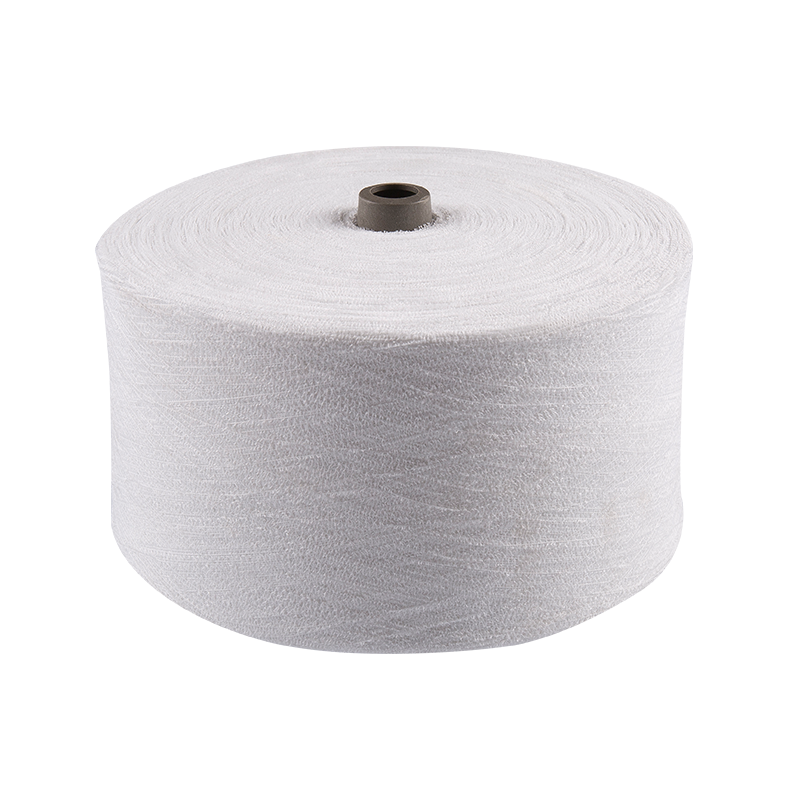 Dope Dyed Polyester Loop Yarn for UpholsteryA loop-textured dope-dyed yarn with soft, stretchable handle, suited to upholstery fabrics, cushions and decorative panels.View Product →
Because our town grew up around sofa fabric production, upholstery is where most of our yarn goes. Chenille, loop yarn and dope-dyed loop yarn are woven into sofa covers, curtains, cushions and decorative panels where texture and colour stability both matter. Beyond that, feather yarn and toothbrush yarn appear in knitwear, scarves and hats, or as accent threads in trims and edging. Double-faced velvet crochet yarn suits projects where both sides of the fabric are visible, such as blankets and reversible garments. And a steady share of our output heads to craft and hobby channels, where the same yarn that fills a sofa programme is sold in smaller lots to people who simply enjoy crocheting with something unusual.
We are a B2B yarn factory, not a retail brand, and our customers are fabric mills, importers, home-textile producers and craft suppliers in close to ten countries. Most conversations start with a sample, a photo or a rough description of the effect you want. From there we discuss fibre, count, colour method and packing, then produce a development sample for approval before bulk. Our location near Shanghai and Ningbo ports keeps export logistics simple, and our team works in English, Spanish, Arabic and Turkish. If you would like to see the full picture of what we produce, take a look at our yarn mill and product range, or simply send us the swatch you are trying to match. Fancy yarn is a detail business, and we are happiest when the details are discussed early.

Copyright © Tongxiang Xinsili Textile Co., Ltd. All Rights Reserved. Wholesale High Filament DTY Yarn Manufacturers
