
 English
 Español
 عربى
 Türk
Loop yarn is a kind of fancy yarn, generally composed of core yarn, pressure yarn (sometimes also ca...

 2026.11.10
 Industry News
Content
If you buy crochet yarn in bulk, you have probably met the same small frustration we hear about every week: two cones labelled with the same weight and fibre can behave completely differently the moment they meet a hook. One glides; the other splits, sheds or fights the tension. Choosing a crochet yarn company is really about choosing the mill behind the label, because that is where twist, colour and consistency are decided. We have been spinning polyester-based yarns in Tongxiang since 2004, and this is a plain-language look at what matters.
A craft brand sells you a ball of yarn. A mill decides whether that ball can be repeated ten thousand times with the same hand, the same shade and the same behaviour on the hook. That difference matters most for crochet, which is far less forgiving than knitting in a few specific ways.
Crochet works from a single live loop, so the yarn is pulled through itself again and again. A yarn that is loosely twisted will split under that repeated pull; a yarn with irregular thickness will show every bump as a lump in the fabric. Fancy structures add another layer of difficulty, because the decorative effect sits on a core that has to hold. Our starting point for every crochet development is therefore the core: how strong it needs to be, how much twist it needs, and how the surface effect should behave once it is worked into a stitch.
Practical things we watch for on a crochet yarn order include knot-free cones, even winding tension so the yarn draws smoothly, shade repeatability across lots, and a clear retained standard sample so the tenth shipment still matches the first.
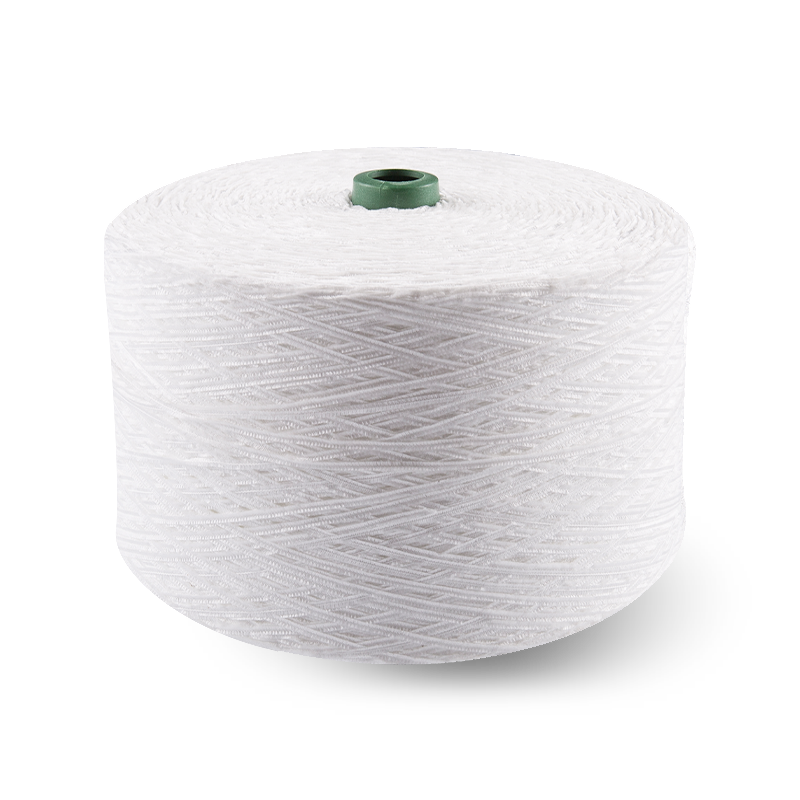
Our base material is polyester, and our focus is differentiation: changing structure, surface and colour to create yarns that look and feel like something specific rather than generic. Across our fancy crochet yarn range you will find structures built for texture, softness and visual interest, all available in the widths and shades a project needs.
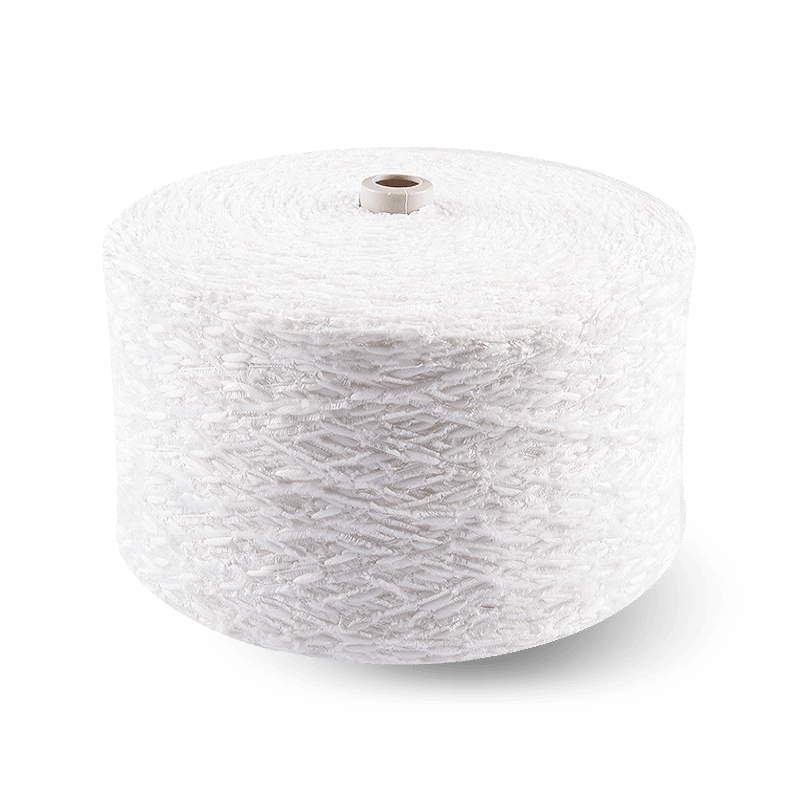
Fancy crochet yarn carries a visible surface effect on a stable core, which makes it a natural fit for scarves, trims, bags and statement panels where the yarn itself is the design.
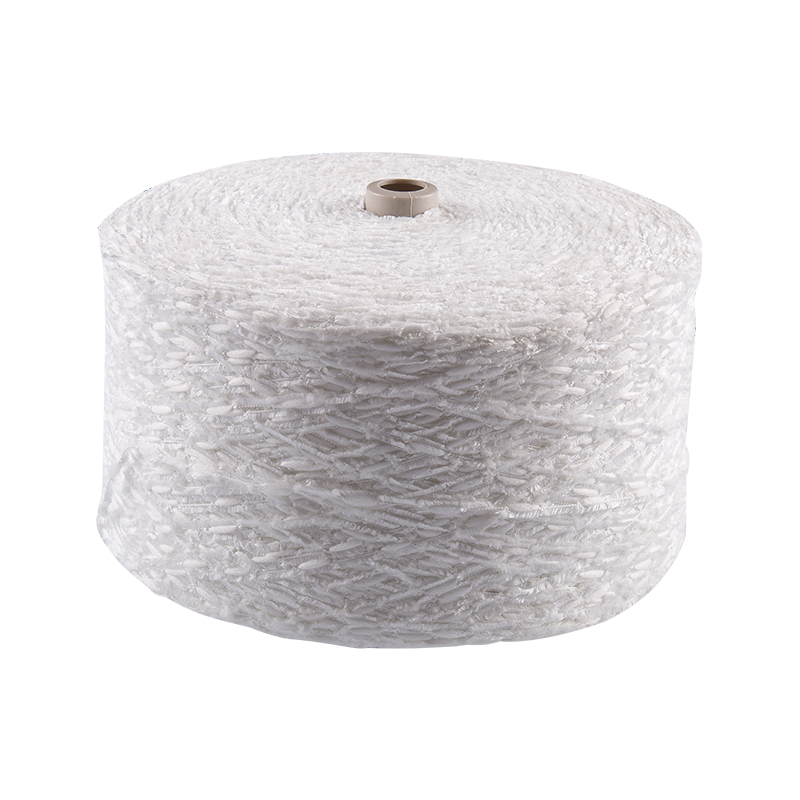 Crochet Fancy Yarn for Textured AccessoriesA textured crochet yarn suited to scarves, trims, bags and statement panels, with flexibility for small personalized projects.View Product →
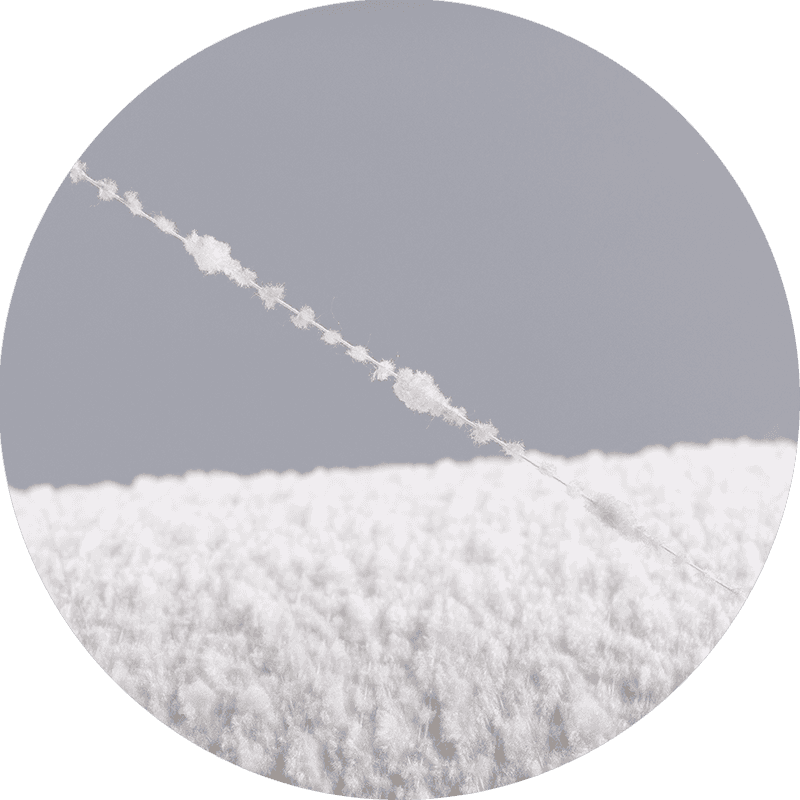
Feather yarn places soft fibre bundles along the core like a plume. It is light, airy and quick to work up, and it hides stitch irregularities beautifully, which is why it appears so often in fluffy accessories and home pieces.
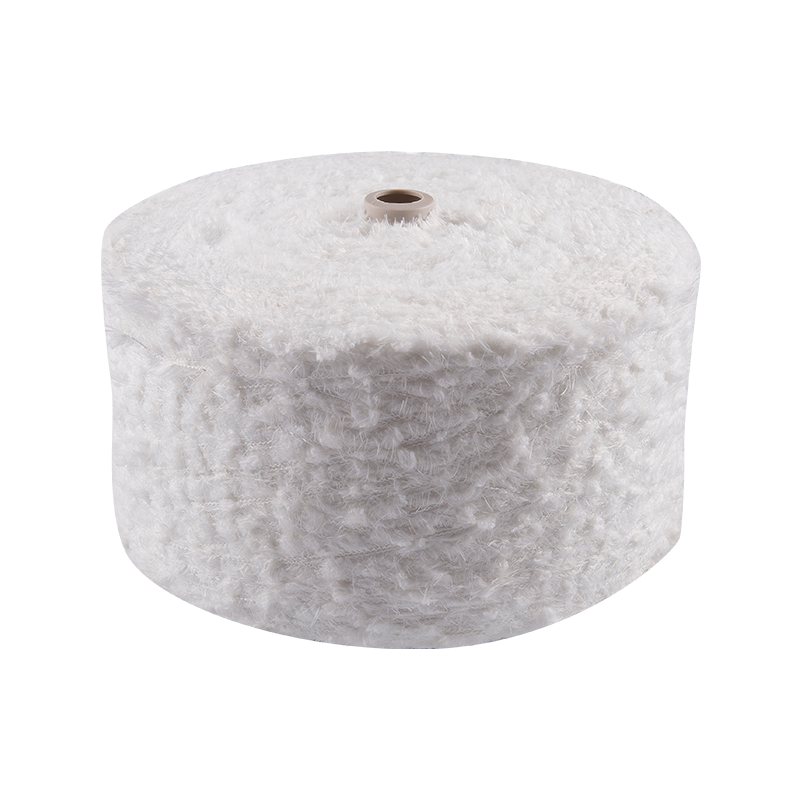 Feather Yarn for Fluffy Knits and AccessoriesA light, airy feather yarn that works up quickly and suits fluffy scarves, garments, accessories and home pieces.View Product →
Chenille is the opposite pleasure: dense, velvety and plush. Our chrysanthemum yarn opens its fibres in a soft bloom around the core, giving the rounded, cushiony hand that crocheters associate with velvet projects.
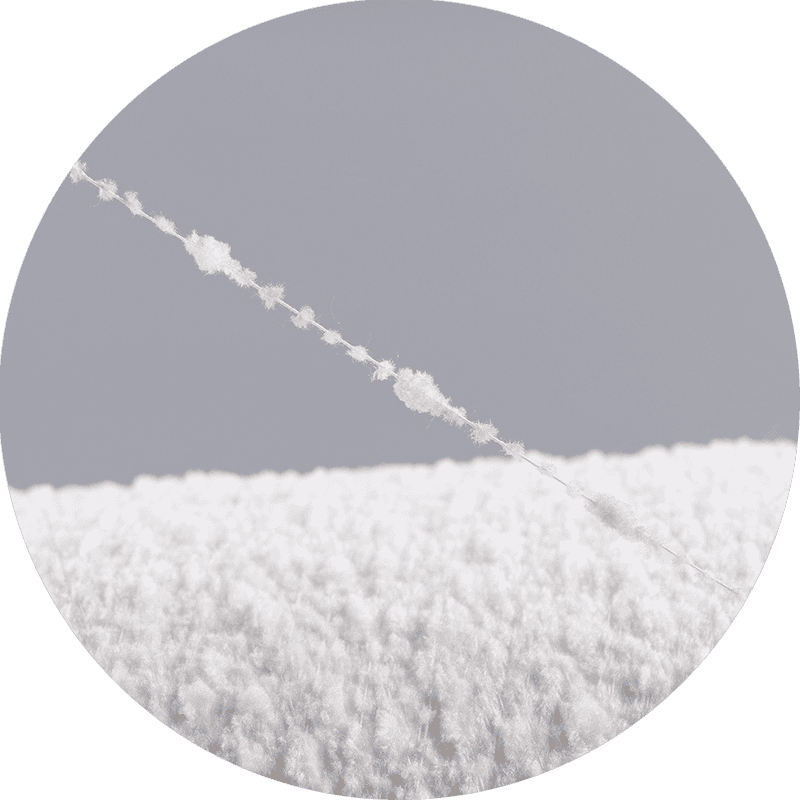 Chrysanthemum Yarn for Soft Decorative CrochetA soft, petal-textured fancy yarn for scarves, hats, crochet projects and interior decoration, available for wholesale.View Product →
| Yarn family | Surface character | Typical crochet uses | What to watch |
|---|---|---|---|
| Fancy crochet yarn | Loop and slub effects | Scarves, bags, trims, statement panels | Choose a simple stitch so texture stays readable |
| Feather yarn | Fluffy, plume-like | Accessories, soft home pieces, amigurumi accents | Work with a slightly larger hook to avoid packing |
| Toothbrush yarn | Short upright fibres | Textured borders, rugs, craft embellishment | Check washing behaviour before bulk commitment |
| Centipede-like yarn | Dense, evenly spaced fibres | Sculptural texture, trims, decorative panels | Keep tension steady to preserve the pattern |
| Chenille / chrysanthemum | Plush, velvety bloom | Blankets, cushions, soft toys | Store flat and avoid over-working the same stitch |
Most complaints about a crochet yarn turn out to be a pairing problem rather than a yarn fault. A dense chenille in a tight single crochet can feel stiff; a delicate feather yarn stretched over a large hook can lose its shape. As a rule, textured yarns reward looser tension and simple stitches, while smoother yarns carry the intricate stitch patterns.
Weight matters too, especially when a customer converts a pattern written for one market into a yarn sourced for another. If you want a structured walk-through of the options, our guide to crochet yarn types, weights and selection covers the basics we discuss with buyers every month.
Much of what we produce starts as a sample in a courier envelope. We keep this process deliberately simple, because most of our customers are developing a new fabric or a new craft line and need answers quickly rather than a long negotiation.
Because our range already runs to hundreds of yarn types, many briefs are met from existing stock rather than from scratch, which shortens the path from sample to shipment considerably.
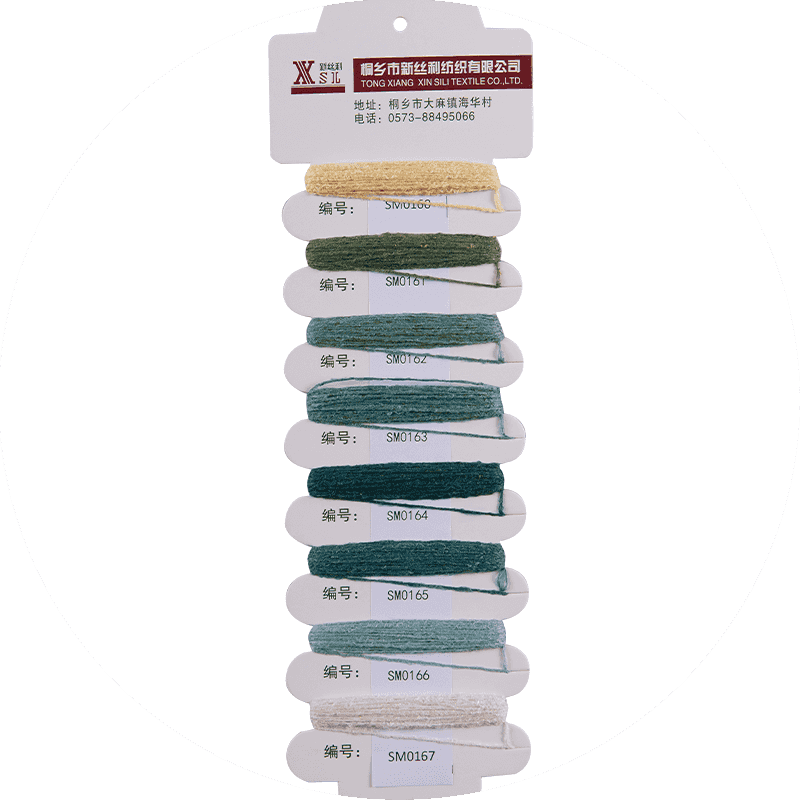
Colour is where good intentions most often fail. A shade that matches beautifully in March can drift by September if the dyeing route changes between lots. One approach that removes much of that risk is solution dyeing, where pigment is added during fibre production rather than applied afterwards. The result is a yarn whose colour runs through the fibre itself, with strong fastness and far less water used in the process.
Our doped-dyed polyester yarns, including a 1250D specification and a doped-dyed loop yarn, are produced this way. For crochet projects where the finished item will be washed, handled or displayed in sunlight, that stability is worth more than a marginal difference in price. For everything else, we work from a colour card and confirm shades against physical samples before bulk.
We run our own testing laboratory with a full set of inspection equipment, and we use it to check production rather than to decorate a brochure. Capacity exceeds 60,000 tons a year, so orders of very different sizes can sit on the same production plan without one crowding out the other.
Location helps as well. Our mill sits in Damai, Tongxiang, close to both Shanghai and Ningbo ports, which keeps export logistics straightforward for buyers in Europe, the Middle East, North Africa and beyond. We currently work with customers in close to ten countries, and those relationships are mostly built on the unglamorous things: answering questions quickly, quoting clearly, and shipping what was agreed.
Before you commit to a supplier, these are the questions we would ask in your position:
If you are weighing up a crochet yarn company for a new collection, the most useful next step is usually a conversation and a sample in the post. Tell us what you are making, send a reference if you have one, and we will tell you honestly whether we can spin it well. That is a far better use of your time than a catalogue full of promises.
Copyright © Tongxiang Xinsili Textile Co., Ltd. All Rights Reserved. Wholesale High Filament DTY Yarn Manufacturers
