
 English
 Español
 عربى
 Türk
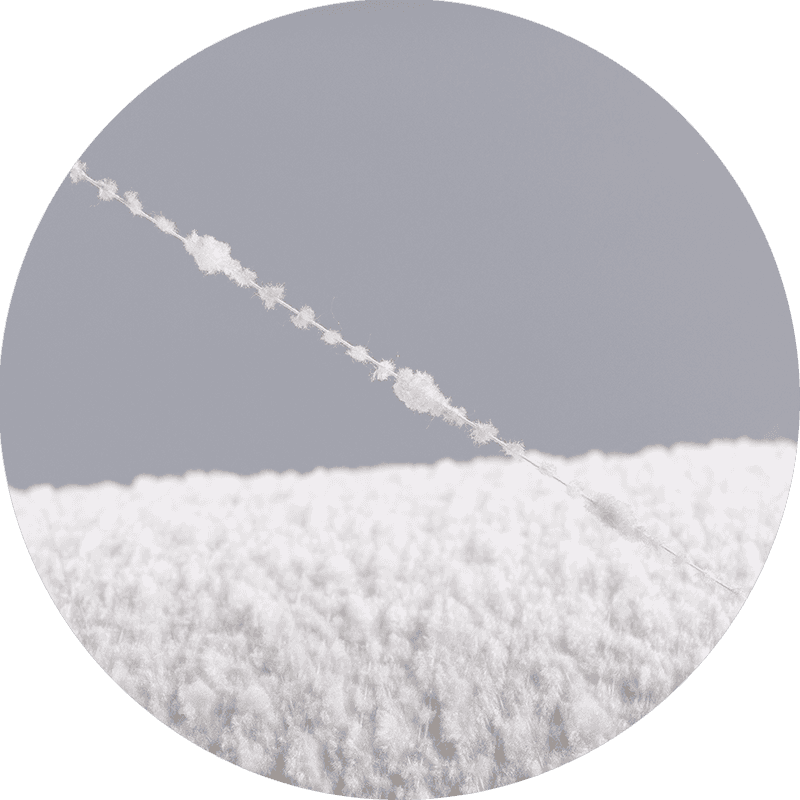
Loop yarn is a kind of fancy yarn, generally composed of core yarn, pressure yarn (sometimes also ca...

 2026.11.03
 Industry News
Content
Most people who type "crochet yarn company" into a search bar are not browsing for a hobby skein. They are sourcing — for a collection, a factory order, a small brand's first production run, or a craft line that needs to feel different from everything already sitting on the shelf. The brief usually arrives as a photograph, a swatch in an envelope, or one honest sentence: "something soft with a bit of texture, in these three colours, and it has to hold up in a wash."
We have been on the receiving end of that conversation since 2004, spinning differentiated polyester yarn in Dama Town, Tongxiang, a small town on the Grand Canal that the industry here calls the home of sofa textiles. What follows is a plain-spoken look at how a yarn mill like ours works, what we can and cannot do, and how to tell whether a supplier is the right fit before you commit to a container.
There is a useful distinction to make early. Some companies that sell crochet yarn are brands: they design colour cards, photograph projects, and have the yarn spun for them elsewhere. Others are mills, which is what we are — we buy polyester chip and filament, spin and twist it, and ship cones to weavers, converters, importers and craft suppliers. Both models are legitimate, but they answer different questions. A brand sells you a finished assortment. A mill sells you a specification, and then helps you hit it.
Because our base material is polyester, the "differentiation" happens in structure rather than in fibre source. We change how the filament is texturised, how it is twisted, how the surface fibres are cut or looped, and at what stage the colour goes in. Those four levers produce the dozens of yarns in our sample room, from smooth linen-like filament to yarns that look almost like fur. You can read more about how the company grew on our mill's story page, but the short version is that we have spent two decades learning how far a polyester filament can be pushed before it stops behaving.
Buyers who are new to fancy yarn tend to assume each product is a separate material. In practice, the same polyester base reappears in four broad families, each defined by surface and colour rather than chemistry. The table below is the quick version we usually sketch on a notepad during a first meeting.
| Family | What you see and feel | Where it usually ends up |
|---|---|---|
| Base polyester (DTY, linen-like, cotton-like, high-shrinkage) | Smooth, even, matte hand feel that mimics natural fibre | Upholstery grounds, apparel blends, industrial weaving |
| Chenille and chrysanthemum yarn | Dense pile, deep softness, rich light absorption | Sofa fabric, curtains, plush home textiles, amigurumi |
| Crochet fancy yarns (feather, toothbrush, centipede-like, double-faced velvet, loop) | Strong three-dimensional texture, visible structure, playful | Garment trims, bags, cushions, craft and accessory lines |
| Doped-dyed yarns (including 1250D and loop varieties) | Colour built into the filament, consistent shade, no surface crocking | Outdoor textiles, contract upholstery, wash-heavy projects |
If you only remember one thing from this section, let it be that none of these yarns is "better" than the others. A feather yarn makes a beautiful scarf and a terrible sofa seat. The right question is always what the finished piece has to survive.
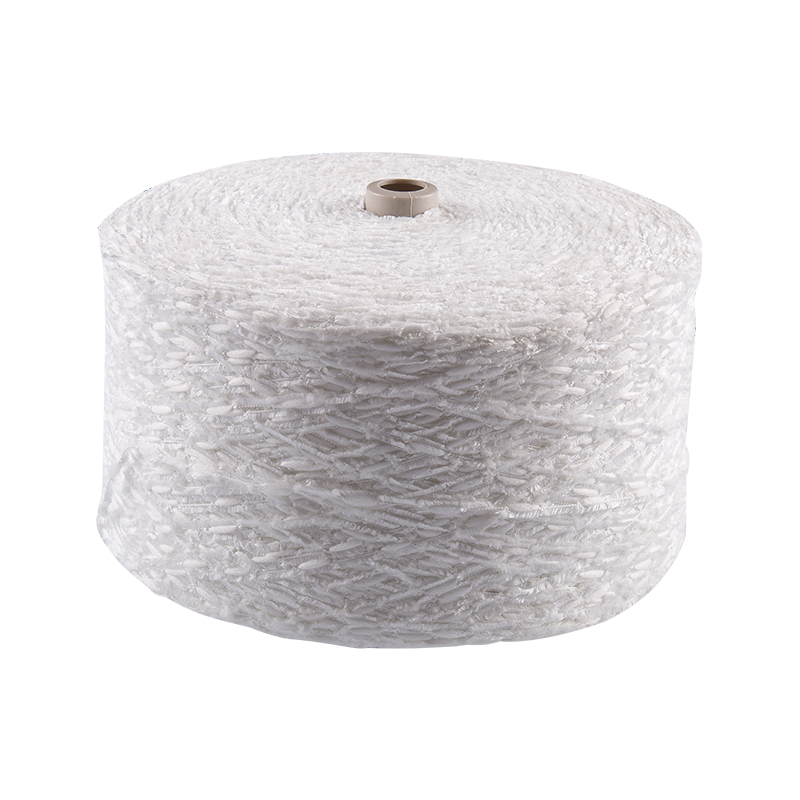 Crochet Fancy Yarn for Small Patterned ProjectsWholesale fancy crochet yarn for flowers, geometric motifs and quick small projects, with adjustable tension for varied textures in clothing and home decor.View Product →
This is where most sampling conversations live. A textured yarn does not hide in a fabric; it announces itself. Loop and bouclé structures give a surface that reads as tweed or terry from three metres away, which is exactly what you want in a throw or a cushion and exactly what you do not want in a tailored jacket. Velvet-type crochet yarns carry pile on both faces, so the reverse of the fabric is presentable — useful for scarves, blankets and anything seen from behind.
Gauge matters as much as structure. A toothbrush yarn with stiff, perpendicular fibres holds its shape in a bag panel and can look sparse if worked too loosely, while a chrysanthemum-style chenille blooms when the hook size leaves it room to breathe. When a customer sends us a photo of a finished crocheted bag with no technical details, our first reply is usually a question about gauge and hook size, not about colour. Our guide to crochet yarn types, weights and selection covers that ground in more detail if you are still narrowing the field.
 Double-Faced Velvet Crochet Yarn for Soft Winter ItemsSoft two-surface crochet yarn with plush velvet on one side and smooth fabric on the other, suited to winter clothing, home items and gifts.View Product →
Custom development is the part of the job we enjoy most, and it almost always starts small. A swatch arrives; our technicians pull it apart, work out the filament specification, the twist direction and the surface treatment, then run a trial. Sometimes the match is straightforward. Sometimes it takes three attempts, because a yarn that looks identical on a cone can behave differently under a hook, and hand feel is stubbornly difficult to describe in a specification sheet.
We ask for as much context as a customer can share: the intended end use, the working method, the colour standard, the target weight per cone, and any test the finished goods must pass. With that in hand we can propose an existing yarn or develop a new one, quote it honestly, and produce a sample for approval before any bulk commitment. Nothing about this process is instant, but it is predictable — and predictability is what buyers actually pay for.
Colour is where cheerful optimism meets chemistry. Yarn can be dyed after spinning, or it can be coloured at the filament stage — the doped-dyed route — so the shade is locked into the fibre before it ever reaches a needle. Doped-dyed yarns save a downstream dyeing step, avoid the water and energy that go with it, and hold their shade through repeated washing and sunlight far more gracefully than a surface-dyed equivalent. For contract upholstery or outdoor textiles, that difference is often the deciding factor.
The trade-off is flexibility: doped-dyed shades are set at the spinning stage, so minimum quantities and lead times reflect that. For buyers planning a stable, repeatable colour programme rather than a fast-changing fashion palette, it is usually the better bargain. Our loop-yarn version of this family has become a quiet favourite among customers who need texture and colourfastness in the same cone.
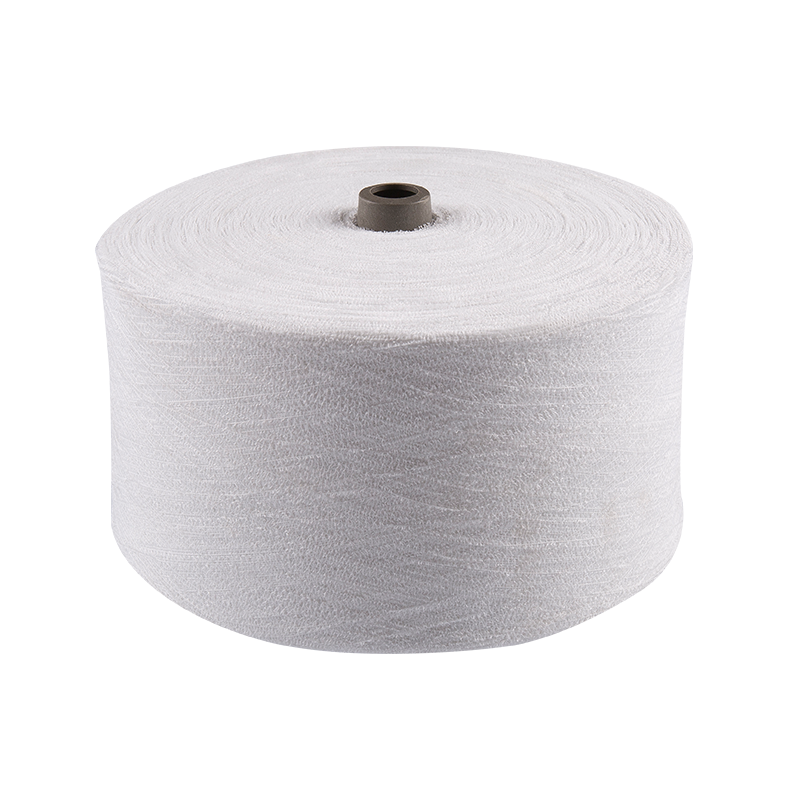 Dope Dyed Polyester Loop Yarn for Textured ProjectsDope-dyed polyester loop yarn with regular textured loops and a soft skin-friendly feel, suited to fashion, home textiles, decorative items and DIY projects.View Product →
Fancy yarn is unforgiving to produce at scale, because a small drift in twist or pile density shows up immediately across a whole lot. We run our own testing laboratory with the equipment needed to check the properties that matter to our customers, and we keep the findings on file so that a reorder six months later still matches the original. Annual capacity exceeds 60,000 tonnes, which means a first order of a few hundred kilos and a repeat order of twenty tonnes both get scheduled seriously.
Location helps more than people expect. Tongxiang sits within easy reach of both Shanghai and Ningbo ports, so export paperwork, consolidation and sailing schedules are routine rather than exotic. We currently work with customers in around ten countries, and that number has grown mostly by referral — a converter moving a successful fabric line to a new supplier is still the most common way we meet someone new.
After enough first conversations, the same themes come up again and again. These are the ones worth settling early:
None of these has a universal answer, which is precisely why a mill that communicates clearly is worth more than one that simply quotes lowest.
If you are preparing to approach a crochet yarn company for the first time, a little preparation shortens the process considerably:
Good sourcing relationships rarely begin with a price list. They begin with a clear brief and a supplier willing to say "that structure won't do what you're hoping for — here is what will." We would rather have that conversation early, before anyone has paid for a container.
If you are working on something textured, soft, or unusually coloured and you are not sure which yarn family fits, send us what you have. A photograph, a sketch and a rough idea of quantity is enough to start, and you will get a straight answer about whether we can help — and occasionally an honest suggestion that a different structure would serve you better.
Copyright © Tongxiang Xinsili Textile Co., Ltd. All Rights Reserved. Wholesale High Filament DTY Yarn Manufacturers
