
 English
 Español
 عربى
 Türk
Loop yarn is a kind of fancy yarn, generally composed of core yarn, pressure yarn (sometimes also ca...

 2026.10.27
 Industry News
Content
Spend an afternoon on the floor of a crochet fancy yarn factory and the first thing you notice is the sound: spinning frames humming, winding machines whirring, and polyester filament hissing as it is drawn, twisted and wound onto cone after cone. It is a working mill, not a showroom. What matters is what happens between the bobbins, where plain filament goes in at one end and yarn with genuine texture comes out at the other.
We are Tongxiang Xinsili Textile Co., Ltd., a yarn mill based in Dachang Town, Tongxiang, Zhejiang Province. Our town sits beside the Grand Canal and is known locally as China's sofa fabric town, which explains a great deal about the yarns we make. Since 2004 we have been spinning differentiated polyester yarns, including chenille, boucle, feather, toothbrush and centipede-like styles, for weavers, knitters, importers and furniture makers in close to ten countries.
A fancy yarn mill occupies the middle of the textile chain rather than either end of it. Upstream, polyester chips are melt-spun into filament. Downstream, that filament becomes fabric on a loom or a circular knitting machine. The yarn factory is the stage in between, where the material is given its character: its surface, its hand feel, its elasticity and its colour.
Our own range falls into three broad layers, which is a useful way to think about any mill you visit.
Our annual capacity runs above 60,000 tons, and the catalogue covers several hundred varieties, but volume alone is not what most buyers are looking for. What usually matters more is whether a mill can hold a shade, repeat a hand feel and respond when an order is smaller than the production plan would prefer.
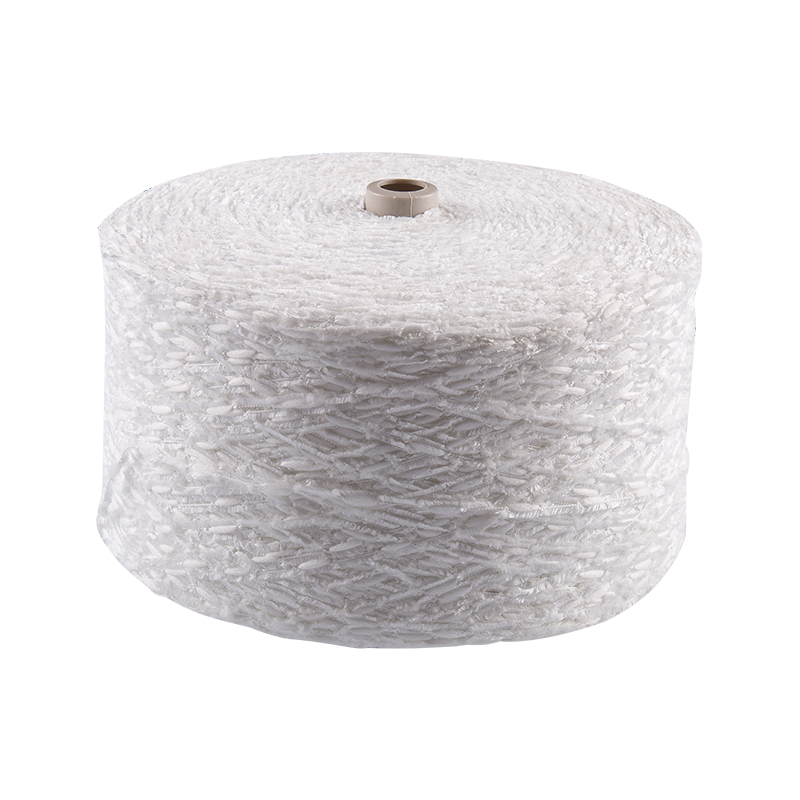 Crochet Fancy Yarn for Patterns, Small Projects and Home DecorWholesale specialty yarn suited to crochet and weaving, offering flexible texture effects for small accessories, winter clothing, and decorative home projects.View Product →
Fancy yarn is rarely about exotic raw material. In most cases the fibre is ordinary polyester filament; the difference comes from how that filament is arranged. A hollow spindle twists effect threads around a core. An air-jet unit creates intermittent loops and slubs. A chenille machine feeds a dense pile between two firmly twisted core threads. Change the machine setting and you change the yarn.
| Yarn type | Surface structure | Common applications |
|---|---|---|
| Chenille yarn | Dense pile held between twisted cores | Sofa fabric, curtains, cushions, home textiles |
| Loop and boucle yarn | Regular rings and loops along the core | Upholstery, knitwear, textured outerwear |
| Feather yarn | Soft fibre tufts standing out like feathers | Scarves, hats, garment trim, decorative fabric |
| Toothbrush yarn | Short fibre standing upright along the core | Trims, edging, craft and embellishment work |
| Centipede-like yarn | Densely spaced fibre segments along the axis | Novelty fabric, accessories, craft projects |
| Chrysanthemum yarn | Fibre opened into a blossom-like crown | Fashion fabric, decorative home textiles |
Each of these behaves differently on the machine. Feather yarn is light and airy and needs a gentle tension; loop yarn resists flattening; chenille demands a clean cut so that it does not shed. Choosing between them is really a question about the fabric you have in mind, not about which sample looks best pinned to a card. If you would like a broader overview first, this explanation of how the main novelty yarn families differ is a helpful place to start.
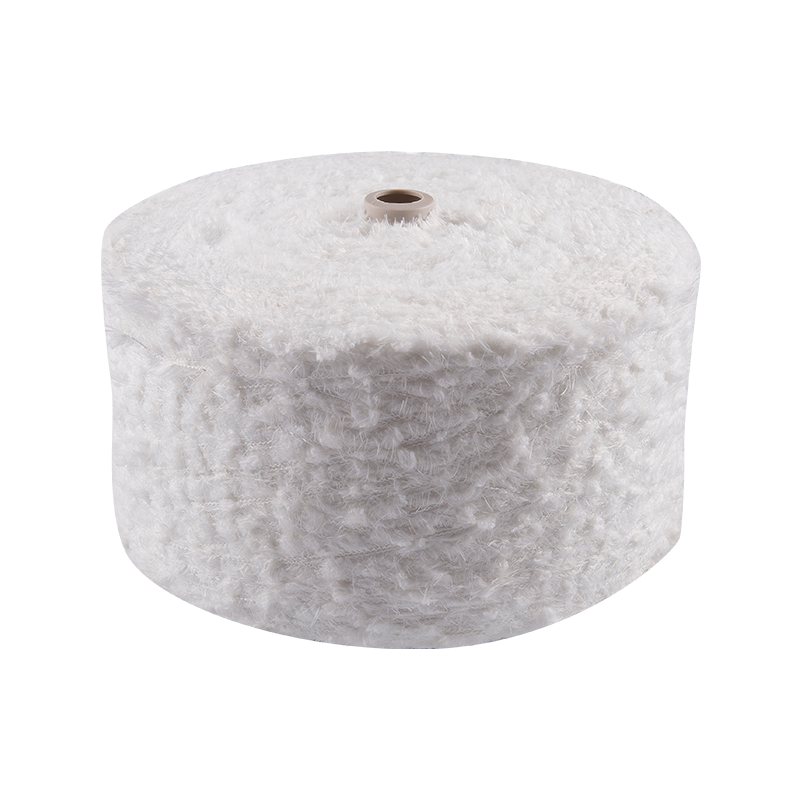 Nylon or Polyester Feather Yarn for Knitwear and TextilesLight, airy wholesale fancy yarn in nylon or polyester, with a pine-like appearance for sweaters, scarves, accessories, carpets and textiles.View Product →
Living in a sofa fabric town shapes the way a mill thinks. Local weavers need yarns that feel soft under the hand, hold their pile after abrasion, and take colour evenly across a large order. Chenille has been at the centre of that demand for decades, and it remains the yarn we are asked about most often.
Our chenille family includes chrysanthemum yarn, whose fibres open into a blossom-like crown that gives upholstery fabric a fuller, softer surface. It blends readily with plainer polyester yarns, which is why designers often use it for the face of a cushion while keeping a simpler yarn on the reverse. For a deeper look at the material itself, our chenille yarn guide covers how it behaves in knitting and in household textiles.
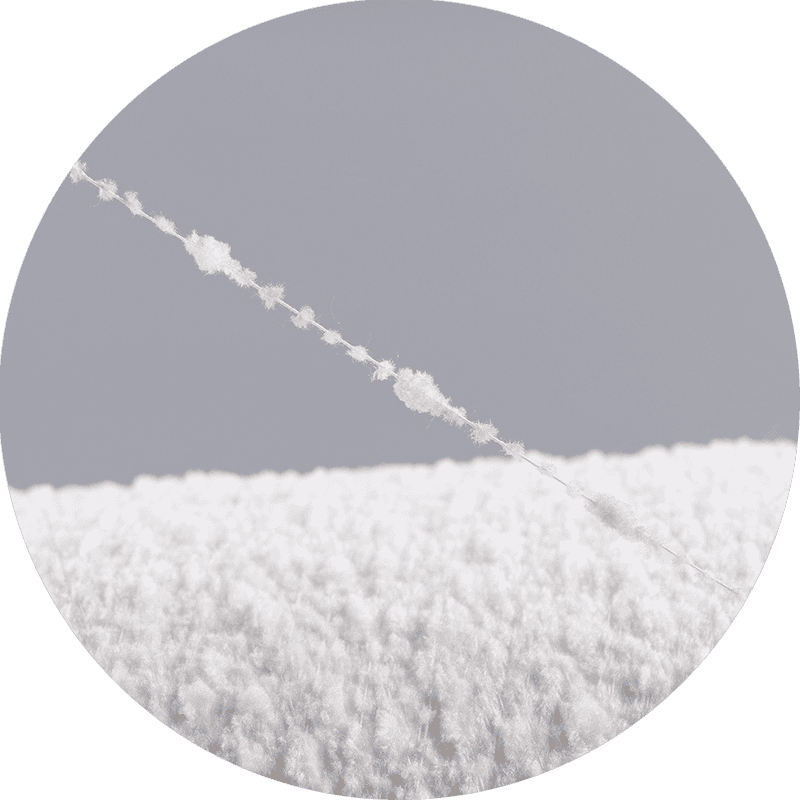 Chrysanthemum Yarn for Decorative Knitwear and Home TextilesSpecialty wholesale fancy yarn with a petal-like texture, suitable for scarves, shawls, hats, crochet projects, accessories and interior decoration.View Product →
Colour is usually the last step in a textile chain, and also the one that causes the most trouble. Doped-dyed yarn takes a different route: pigment is added to the polymer before the filament is formed, so the shade is part of the fibre rather than a coating on top of it. Colourspun yarns follow the same logic at the spinning stage.
The practical benefits are steady. Because there is no subsequent dyeing, colours stay consistent from batch to batch, the yarn is less prone to fading, and the process uses considerably less water. Our doped-dyed range includes a 1250D polyester yarn and a doped-dyed loop yarn with a built-in three-dimensional surface. Both are worth considering where a buyer needs a stable shade across repeat orders or works with a fabric that is difficult to dye after weaving.
Much of our work begins with a swatch that a customer sends us, sometimes with a note attached saying only "something like this". That is a perfectly good starting point. Development usually moves through a few clear stages.
There is no charge for that conversation, and no obligation to place an order at the end of it. Our own testing laboratory supports the process by checking the properties that matter for your end use, so that what you approve as a sample is what arrives as a shipment.
Whether you are buying from us or from another mill, a handful of questions will tell you a great deal about how the relationship is likely to go.
Clear answers to those five questions are worth more than any brochure.
Fancy yarn is a business built on small details. A twist level adjusted by a fraction, a shade held a little tighter, a sample sent out two days earlier — these are the things buyers remember long after the price discussion is over. We have been spinning polyester yarns in Tongxiang since 2004, and we still enjoy the part where a customer's idea turns into a cone of yarn they are happy to weave or knit with.
If you have a swatch on your desk, or just a description of the effect you are hoping for, send it over. We will tell you honestly what can be made, what it will cost, and how long it will take.

Copyright © Tongxiang Xinsili Textile Co., Ltd. All Rights Reserved. Wholesale High Filament DTY Yarn Manufacturers
