
 English
 Español
 عربى
 Türk
Loop yarn is a kind of fancy yarn, generally composed of core yarn, pressure yarn (sometimes also ca...

 2026.10.19
 Industry News
Content
Searching for crochet fancy yarn manufacturers usually turns up page after page of trading companies with near-identical catalogs, and it is almost impossible to tell from a product photo whether the yarn on the cone was spun by the company selling it or bought in from somewhere else. With fancy yarn that distinction matters more than with plain yarn, because the texture is the product.
We are Tongxiang Xinsili Textile Co., Ltd., a polyester yarn mill in Dama Town, Tongxiang, Zhejiang. The town sits beside the Grand Canal and is known locally as the national sofa fabric town, which means we grew up next door to the weavers who use our yarn. We have been producing differentiated polyester yarn since 2004: DTY, linen-like and cotton-like filament, chenille, crochet fancy yarn, loop yarn and doped-dyed yarn.
What follows is not a sales pitch. It is the set of questions buyers, designers and small brand owners keep asking us, and the answers that usually help them compare suppliers on something more useful than price per kilogram.
Fancy yarn is a structural idea before it is a color idea. The decoration is created while the yarn is being built: a loop locked into a core, a pile held between twisted threads, short fibers standing upright, or fiber clusters spaced along a filament. Two yarns that look identical in a listing photo can behave completely differently on a 4 mm hook or a flat knitting machine, and the difference almost always comes down to how firmly the effect is anchored to the core.
That is why the first useful question to a manufacturer is rarely "what colors do you have" but "how is the effect built, and how does it survive friction and washing".
| Yarn type | How the effect is built | Where it usually goes | What to confirm |
|---|---|---|---|
| Chenille | Short fiber pile locked between twisted core threads | Upholstery, throws, plush toys | Pile shedding and wash behavior |
| Chrysanthemum | Fiber bundle opened so the tip fans out like petals | Decorative trims, statement fabric | Tip stability under friction |
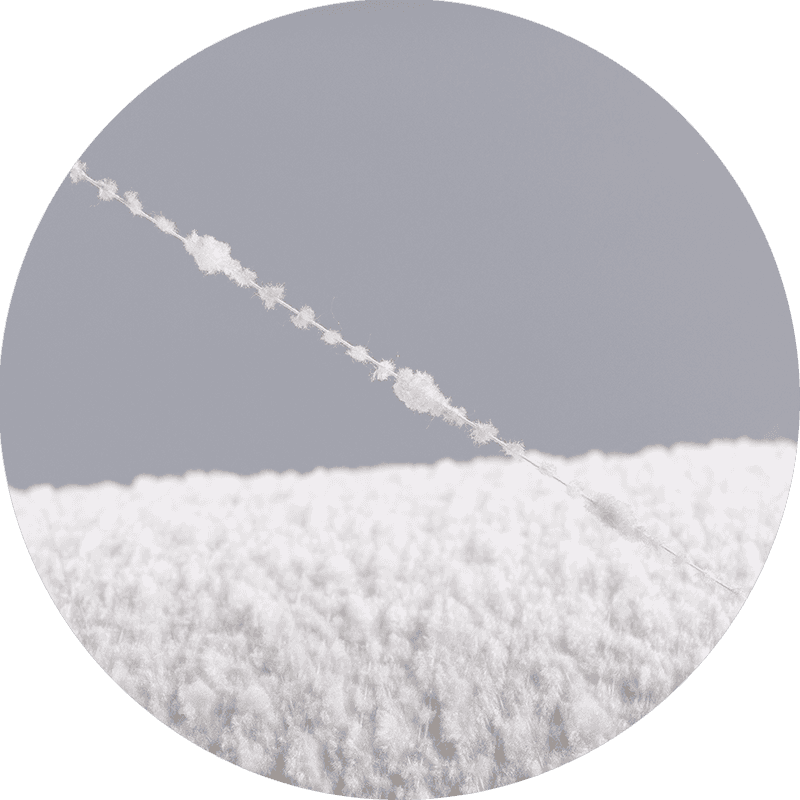
| Loop / bouclé | Loop of yarn locked into the core at intervals | Sofa fabric, jacket cloth, textured knit | Loop size consistency along the cone |
| Feather | Fine fiber tufts spaced along a central core | Scarves, shawls, evening trims | Tuft density and shedding |
| Toothbrush | Short fibers standing perpendicular to the core | Craft work, rugs, costume | Bristle height and durability |
| Centipede-like | Dense fiber clusters spaced like legs along the core | Textured fabric, craft | Spacing uniformity |
| Double-faced velvet | Two pile faces built into a single structure | Two-sided garments, blankets | Face-to-face consistency |
| Doped-dyed loop | Color added to the polymer before extrusion, then looped | Fade-resistant upholstery, outdoor fabric | Colorfastness and lot matching |
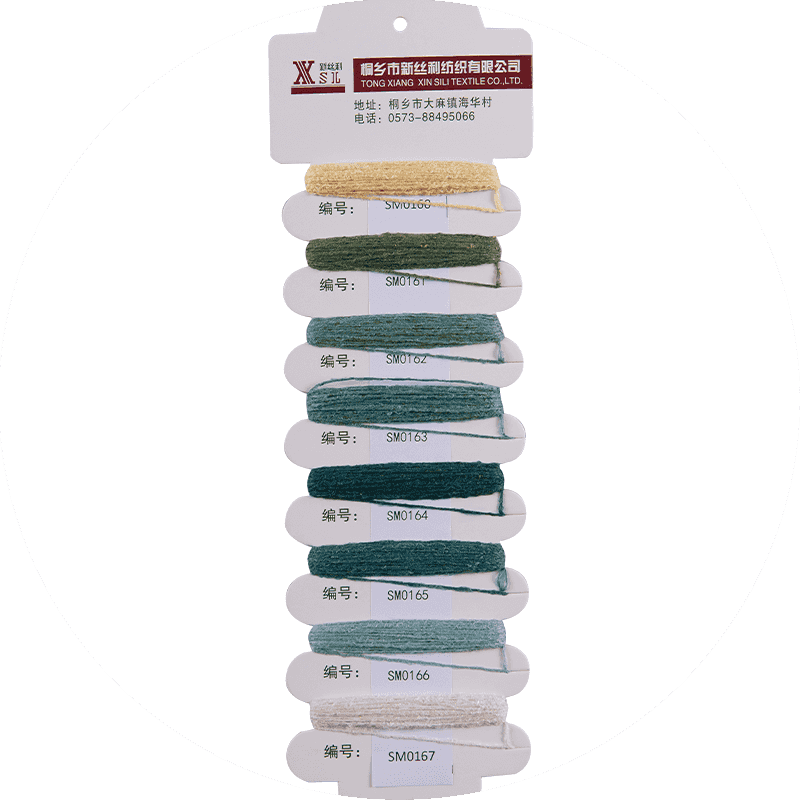
The table is a starting point rather than a specification. Once you know which structure you need, the conversation shifts to counts, color cards and how the yarn feels in the hand — and that is where a mill that spins its own yarn has a real advantage over one that resells.
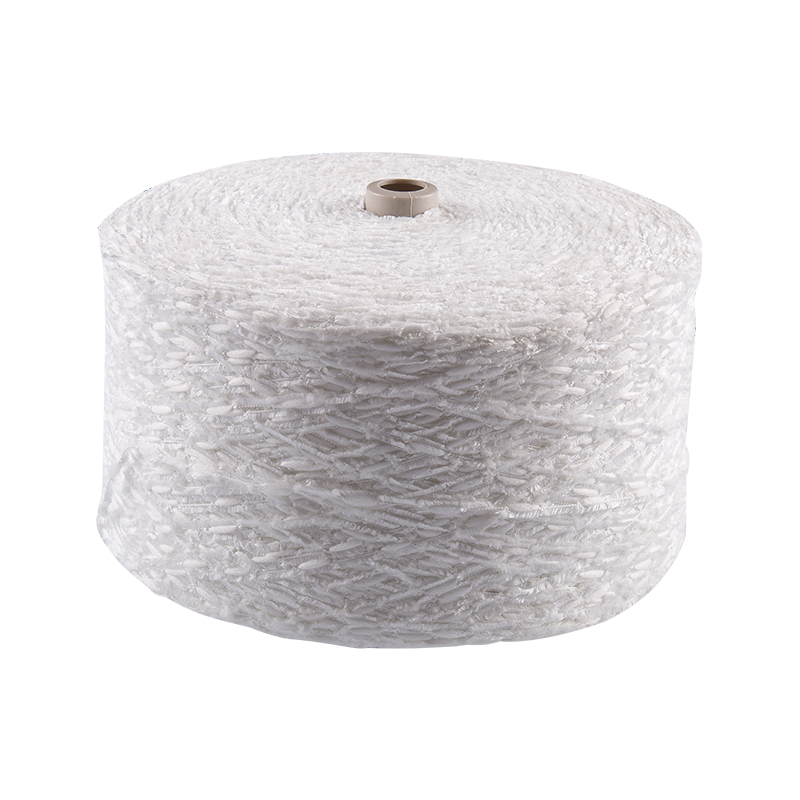 Wholesale Crochet Fancy Yarn for Craft and Textile ProjectsA flexible fancy yarn for small crochet projects and home decor, with adjustable texture and color options worth checking.View Product →
Anyone who compares five or six suppliers in a week starts noticing that the catalogs look alike. These are the questions that usually reveal what a supplier actually is.
None of these are trick questions, but the answers are hard to improvise. A genuine manufacturer can describe the machinery, the sampling route and the testing equipment without reaching for a brochure. We keep our own testing laboratory and a color card because those two things answer the most common follow-up questions before they are asked. If you want the technical background on how the categories differ, we have written a longer reference on novelty yarn classification and its key advantages.
For anything built on color — a sofa fabric collection, a striped jumper, a run of amigurumi toys — shade consistency is the risk that costs the most. Conventional dyeing happens after the yarn is made, so every dye bath is a new variable, and a repeat order placed a season later can arrive visibly warmer or cooler than the first.
Doped dyeing, also called solution dyeing, removes that variable. Pigment goes into the polyester melt before the filament is extruded, so the color is part of the fiber rather than a coating sitting on it. Three practical consequences follow: the shade holds across lots, colorfastness to light and washing is generally higher, and the downstream dyeing step — with its water, energy and effluent — drops out of the supply chain entirely.
Our doped-dyed range covers 1250D polyester yarn as well as a loop structure that combines the texture of a bouclé with the stability of a solution-dyed fiber, which is a useful combination for upholstery that sees sunlight and cleaning cycles.
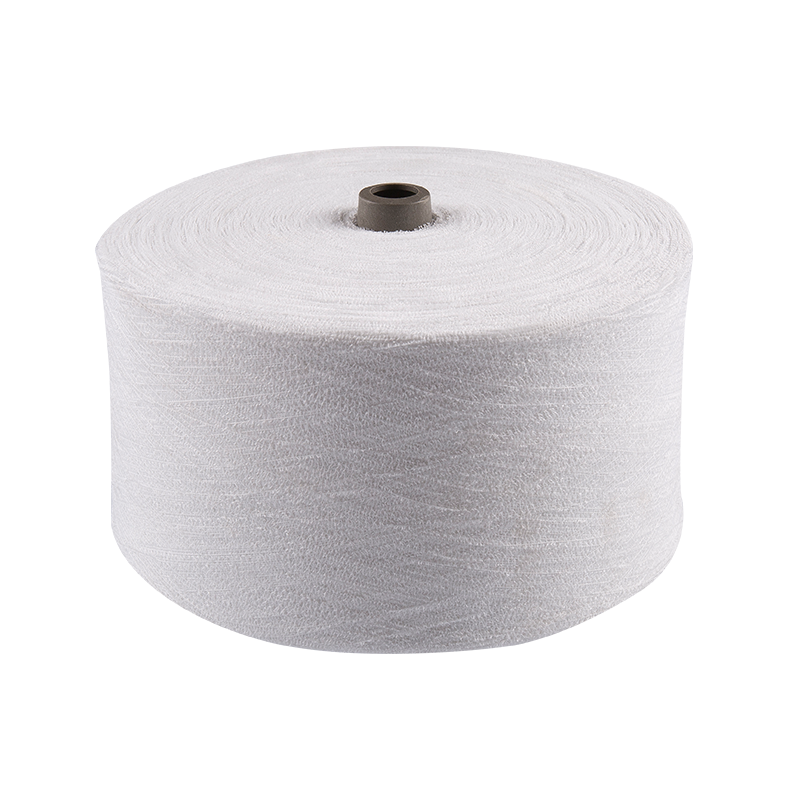 Dope-Dyed Polyester Loop Yarn for Upholstery and Home TextilesA solution-dyed loop yarn with a soft, textured hand and stretch, suited to upholstery, cushions and decorative home textiles.View Product →
Chenille remains the workhorse for anything that should feel soft and dense — sofa covers, cushions, throws. Loop yarn earns its place where the surface needs depth without extra weight, and it hides wear well on seat cushions. Because our region is built around sofa fabric, most of the requests we receive are already aimed at these end uses, and it is easy to pull a sample in the count a weaver actually needs.
Feather and toothbrush structures sit at the decorative end of the range: scarves, shawls, trims, costume pieces and craft projects that need a strong silhouette. Double-faced velvet is the one to look at when both sides of the fabric will be seen. For crochet and hand-knit work, the practical questions are whether the yarn glides on the hook and whether the texture survives blocking; a short sample usually settles both.
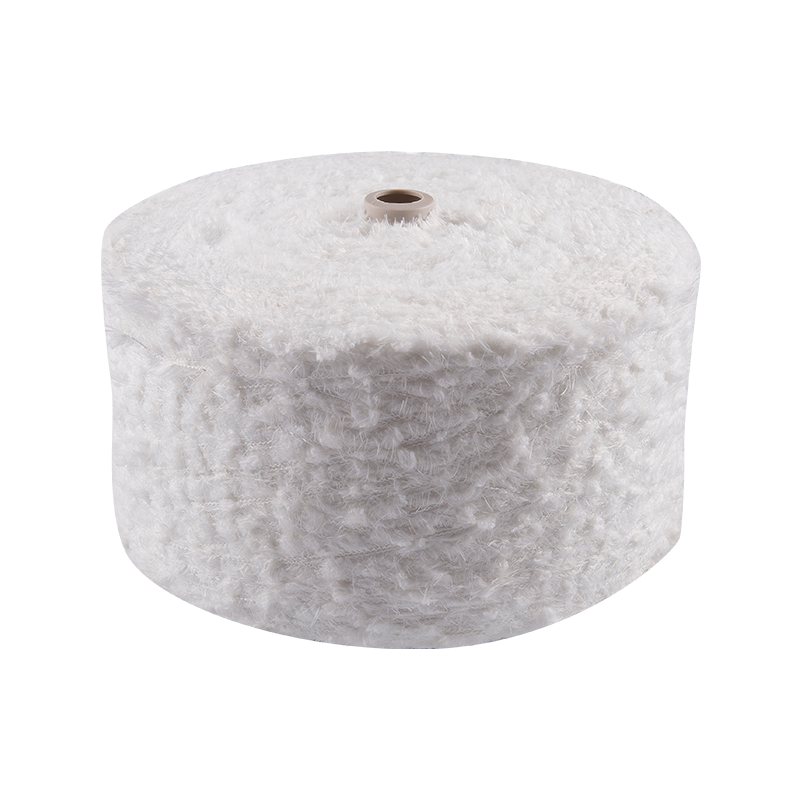 Wholesale Feather Yarn for Scarves, Sweaters and Craft ProjectsA decorative feather yarn with an upright, pine-like texture for scarves, sweaters and craft accents; sample before bulk.View Product →
A realistic development cycle runs from brief to color card or hand sample, then to a counter sample in the final count, then to bulk. The counter sample is the step buyers most often want to skip and the one that saves the most trouble, because it is where pile density, loop spacing and shade all get confirmed together.
Our annual capacity exceeds 60,000 tons and the range covers several hundred yarn variations, which means minimums can be discussed per article rather than as one blanket figure. Development from a customer's own sample is a normal part of the work rather than a favor. On logistics, the mill sits within easy reach of Shanghai and Ningbo, so export bookings are straightforward and documentation is routine — a small point that becomes a large one when a container is waiting.
Choosing among crochet fancy yarn manufacturers comes down to evidence: samples you can handle, a lab you can ask about, and a mill that can explain how the texture is built. If you send us a swatch and tell us where the yarn has to perform, we will tell you honestly whether it is a structure we can make well — and if it is not, we will say so before you place an order.
Copyright © Tongxiang Xinsili Textile Co., Ltd. All Rights Reserved. Wholesale High Filament DTY Yarn Manufacturers
