
 English
 Español
 عربى
عربى Türk
Türk
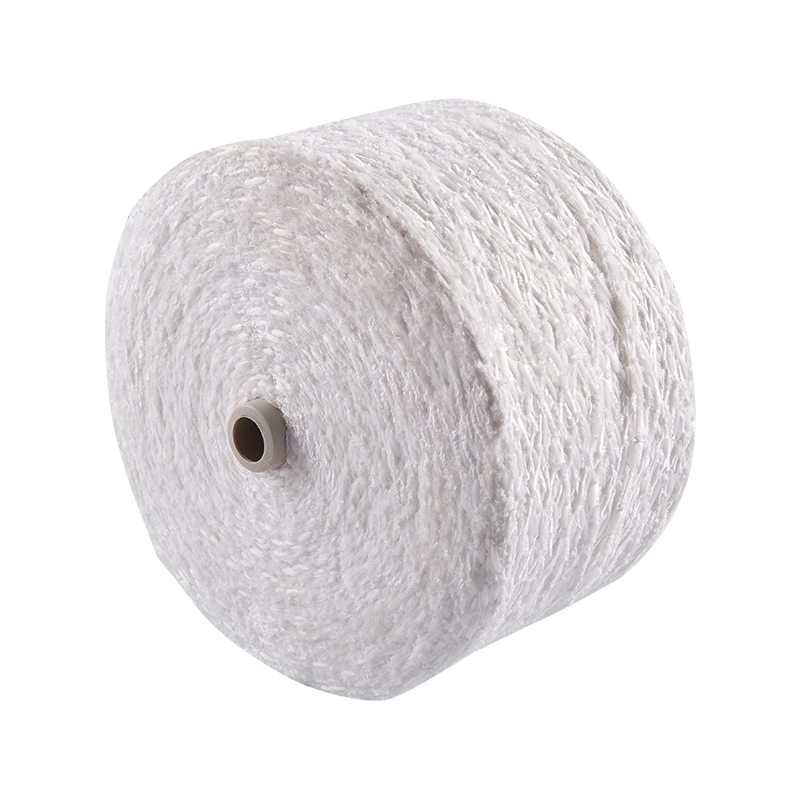
Loop yarn is a kind of fancy yarn, generally composed of core yarn, pressure yarn (sometimes also ca...

 2026.06.02
 Industry News
Content
Fancy yarn is a broad industry term for any yarn that departs from the standard single-ply or plied smooth construction. Where conventional crochet yarn is spun to be uniform in thickness and texture along its entire length, fancy yarns are deliberately engineered to introduce variation — in thickness, surface texture, fiber loops, metallic elements, color distribution, or all of these at once. The visual and tactile interest this creates is the entire point of using them, but it also introduces a set of practical challenges that catch many crocheters off guard the first time they work with a novelty fiber.
The core construction of a fancy yarn typically involves a base thread — often a smooth, strong synthetic or natural fiber — around which additional yarns, loops, curls, or decorative elements are twisted, wrapped, or bonded. The base thread provides structural integrity while the decorative components create the visual effect. Because of this composite construction, fancy yarns are generally less elastic than standard yarns, can be more fragile at the decorative attachment points, and make it significantly harder to see individual stitches as you work. Understanding these characteristics before you begin is the foundation of working with fancy yarn successfully rather than frustratingly.
The fancy yarn category encompasses dozens of distinct constructions, but several types appear consistently in crochet projects and are widely available from craft retailers and yarn suppliers. Each has its own working characteristics and suits different project types.
Eyelash yarn consists of a thin, often nylon or polyester base thread from which fine fibers or filaments extend on both sides, resembling the lashes around an eye. The "lashes" are typically 1 to 3 centimeters long and fan outward to create a fluffy, feathery surface when crocheted. This yarn is extremely popular for scarves, bag trims, hat borders, and children's fashion items because it creates an immediately glamorous or whimsical effect with very little skill investment. The challenge with eyelash yarn is that the base thread is difficult to see against the halo of fibers, making stitch counting and tension maintenance genuinely difficult. Experienced crocheters working with eyelash yarn typically rely on feel more than sight, and they count stitches by running a finger along the base of each row rather than trying to see individual loops.
Bouclé is a French word meaning "buckled" or "curled," and it accurately describes the construction of this yarn type: one or more plies are twisted at different tensions, causing the looser ply to form small loops or curls at regular intervals along the surface. The resulting yarn has a lumpy, textured profile that creates a richly dimensional fabric surface in crochet. Bouclé works beautifully for home décor items like cushion covers, blankets, and baskets where texture is the main design statement. Like eyelash yarn, bouclé obscures individual stitches, but the loops are stiff enough that stitch placement can be felt relatively easily with the hook tip. Hook size selection is critical with bouclé: too small a hook catches the loops instead of the base thread, while a hook large enough to slide smoothly past the loops onto the core thread produces clean, consistent stitches.
Ribbon and tape yarns are flat, band-like structures rather than round-profile threads. They may be woven, knitted in a tubular construction, or extruded from synthetic film. When crocheted, ribbon yarn produces a fabric with a smooth, slightly glossy surface and natural drape that is particularly well suited to summer tops, bags, and accessories. The flat profile means the yarn can twist on itself as you work, which changes how it sits in each stitch. Many crocheters working with ribbon yarn take the extra step of letting their work hang and untwist periodically, or they use a yarn bowl that allows the ribbon to feed evenly without spiraling. Cotton and bamboo ribbon yarns are especially popular for warm-weather garments because they are breathable, absorbent, and have an appealing matte sheen.
Chenille is one of the most beloved fancy yarn types in crochet for its extraordinarily soft, velvet-like hand. It is constructed by trapping short fiber tufts between two twisted core threads, creating a surface that is dense, plush, and incredibly tactile. Chenille produces a "velvet stitch" effect in crochet that makes even basic single crochet fabric look intentionally luxurious. It is the dominant yarn choice for baby blankets, stuffed toys, and lounge accessories. The primary technical challenge with chenille is "worming" — a phenomenon where the tufted pile rotates around the core thread, creating visible bald patches or twisted segments in the finished fabric. This is minimized by working with a slightly larger hook than the label recommends, maintaining a relaxed tension, and avoiding frogging (unraveling) more than necessary, as each pass through a stitch stresses the construction.
Metallic fancy yarns incorporate reflective filaments — often polyester film with a metallic coating, known commercially as Lurex — either as the primary structure or wrapped around a soft fiber core. These yarns catch light to create sparkle and glamour in finished items, making them popular for evening accessories, holiday decorations, and statement pieces. Pure metallic yarns can be scratchy and stiff, but metallic blends with wool, acrylic, or cotton significantly improve wearability. One important practical note: metallic filaments have very low elasticity and can snap under tension if the crochet hook snags them. Working at a relaxed pace and using a smooth, pointed hook tip reduces breakage risk considerably.
Matching yarn type to project requirements is more critical with fancy yarns than with standard yarns because their structural complexity affects drape, durability, stitch definition, and care requirements simultaneously. The table below provides a practical reference for common project types and their most compatible fancy yarn categories:
| Project Type | Best Fancy Yarn Types | Key Consideration |
| Baby blanket or toy | Chenille, velvet yarn | Must be machine washable and non-shedding |
| Scarf or shawl | Eyelash, bouclé, ribbon | Drape and weight affect wearability |
| Evening bag or clutch | Metallic, lurex blend | Choose a structured stitch to support the bag shape |
| Summer top or tank | Cotton or bamboo ribbon yarn | Breathability and drape are essential |
| Cushion cover or home décor | Bouclé, chunky chenille | Durability and ease of cleaning matter most |
| Holiday ornament or trim | Metallic, eyelash | Decorative use only — durability less critical |
Working with fancy yarn rewards patience and a willingness to adapt standard technique. Several adjustments consistently improve results across all fancy yarn types:
The appeal of crochet fancy yarn lies in its ability to produce visually striking results with relatively straightforward technique. A simple rectangular scarf worked in single crochet from eyelash yarn looks finished and intentional in a way that a plain yarn equivalent simply does not. By understanding how each type is constructed, selecting the right yarn for the structural demands of your project, and making small but deliberate adjustments to hook size and stitch choice, crocheters at any skill level can work confidently with fancy yarns and produce pieces that genuinely showcase what these materials are capable of.

Copyright © Tongxiang Xinsili Textile Co., Ltd. All Rights Reserved. Wholesale High Filament DTY Yarn Manufacturers
