
 English
 Español
 عربى
عربى Türk
Türk
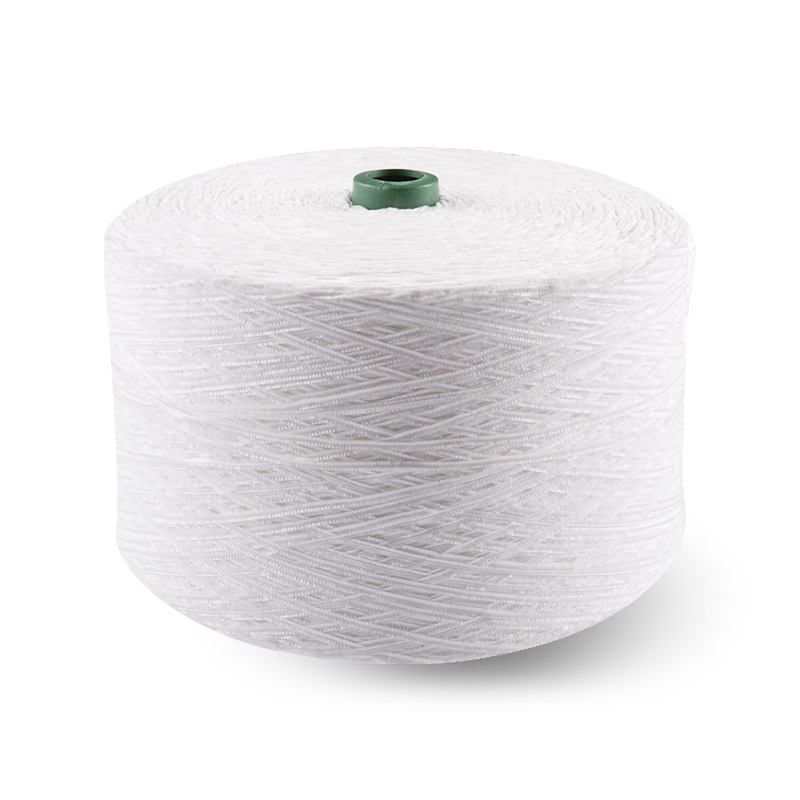
Loop yarn is a kind of fancy yarn, generally composed of core yarn, pressure yarn (sometimes also ca...

 2026.06.10
 Industry News
Content
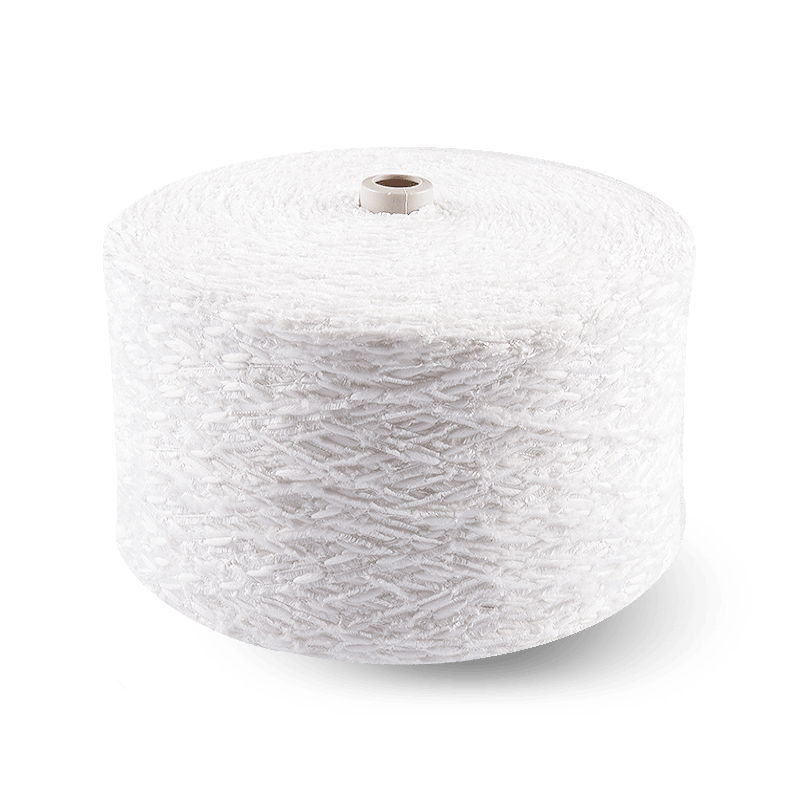
Toothbrush yarn is a specialty textile product that has found a strong foothold across multiple industries, from domestic cleaning goods to industrial filtration and home décor. Its distinctive construction — a central core yarn with short, densely packed fiber tufts twisted or looped outward along its length — gives it a brushlike profile that is immediately recognizable and functionally versatile. Despite its unusual name, toothbrush yarn is not limited to oral care applications. It is woven, knitted, and tufted into a wide range of finished products where its texture, absorbency, and durability make it a better choice than conventional flat-woven or loop-pile alternatives. Understanding what toothbrush yarn is, how it is made, and where it performs best allows manufacturers and product developers to use it more effectively.
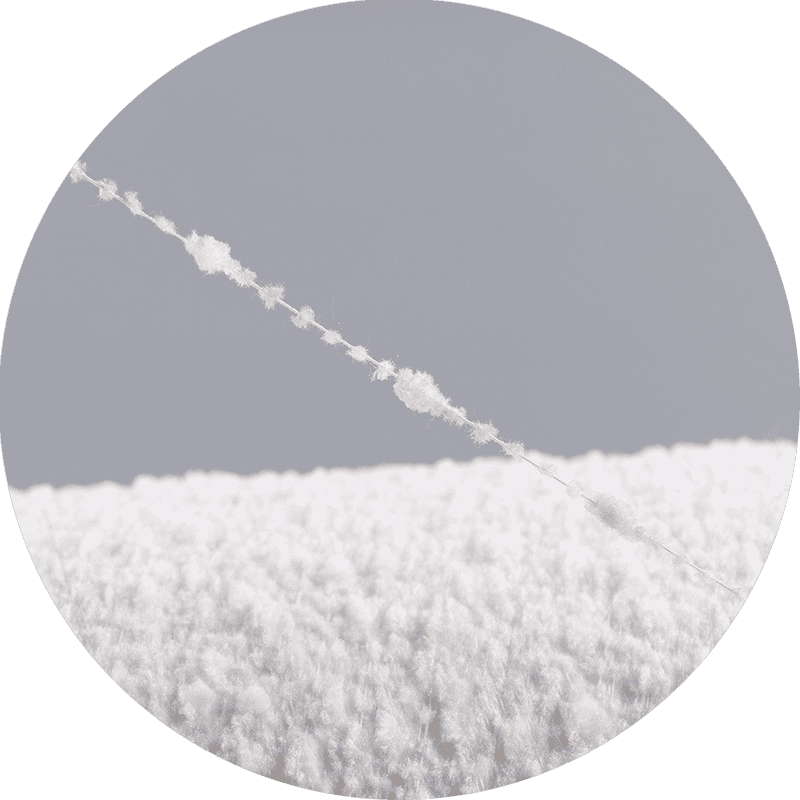
Toothbrush yarn gets its name from the visual resemblance of its finished profile to toothbrush bristles. The yarn is produced by feeding short fiber lengths — typically between 5 mm and 15 mm — into a twisting mechanism that locks them around a continuous core yarn under controlled tension. As the core advances through the machine, the short fibers are captured at regular intervals by the twist of the core, causing them to project radially outward at roughly perpendicular angles. The result is a three-dimensional yarn structure with a dense, bristle-like outer surface and a flexible, tensile core.
The core yarn is typically a twisted or plied structure made from polyester, nylon, or cotton, chosen for its tensile strength and dimensional stability. The pile fibers projecting from the core can be made from a wide range of materials — polyester, acrylic, nylon, microfiber, or natural fibers like cotton and viscose — depending on the intended application. The fiber length, density, and stiffness of the pile are adjustable during production, allowing manufacturers to produce toothbrush yarn in a spectrum of textures from soft and flexible to firm and resilient.
The practical value of toothbrush yarn in textile applications comes from a specific combination of structural properties that flat yarns and conventional loop yarns cannot easily replicate.
The radially projecting fibers of toothbrush yarn create a dramatically higher surface area per unit length than a flat or twisted yarn of equivalent weight. This matters in cleaning and filtration applications because more fiber surface in contact with a substrate means more effective particle capture, liquid absorption, or scrubbing action. A mop head or cleaning pad made from toothbrush yarn engages with floor surfaces across a much larger fiber area than a comparable product made from loop pile or flat pile yarn, translating directly into better soil pickup per pass.
Because the pile fibers of toothbrush yarn are anchored into the core twist rather than simply looped over a backing, they resist crushing and matting better than conventional loop pile structures. When compressed under load or during use, the radial fibers flex rather than collapse permanently, and they recover toward their original projection angle when the load is removed. This resilience makes toothbrush yarn particularly well suited to high-frequency use applications like floor mops, industrial wipes, and bath mats, where repeated compression and washing cycles would quickly flatten a conventional pile yarn.
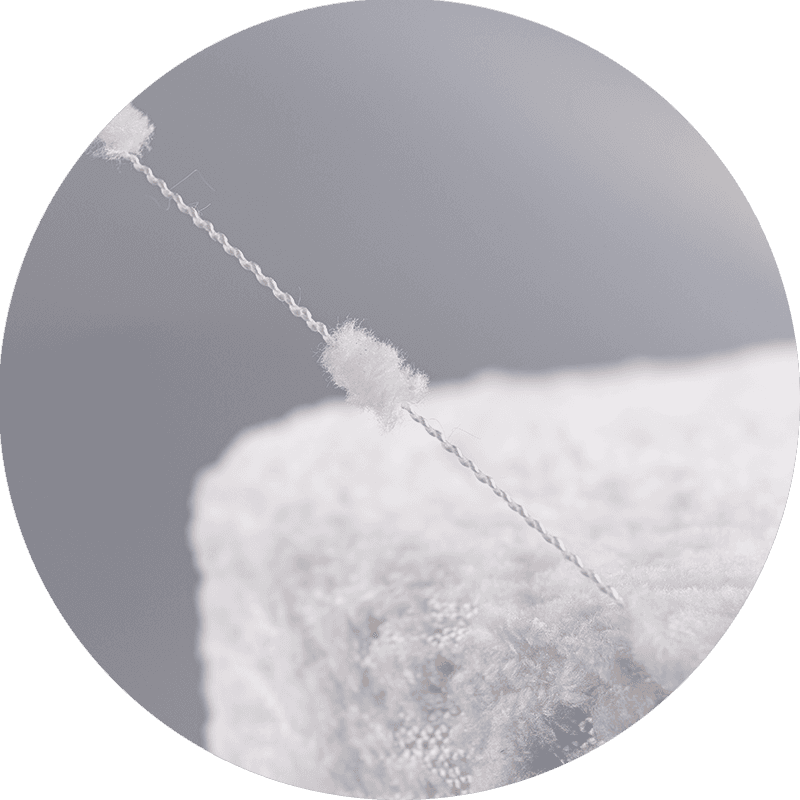
The open, three-dimensional structure of toothbrush yarn holds liquid effectively between its radial fibers during use and releases it efficiently when wrung or mechanically squeezed. This combination of high water retention during application and clean release under pressure is the property that makes toothbrush yarn the dominant construction in wet mop heads. A microfiber toothbrush yarn mop can hold several times its own weight in water during use and wring close to dry without leaving excess moisture on the cleaned surface — a balance that flat-pile and looped mop constructions do not achieve as effectively.
Toothbrush yarn is used in a broader range of finished products than most buyers and specifiers realize. Its applications span from everyday household cleaning products to technical industrial textiles.
| Application | Fiber Type | Key Property Used | Pile Length |
| Wet mop heads | Microfiber, cotton, PVA blend | Liquid retention and release | 10–15 mm |
| Bath mats and shower rugs | Polyester, cotton, acrylic | Absorbency, resilience, softness | 8–12 mm |
| Industrial filtration media | Polypropylene, nylon | Surface area, particle capture | 5–10 mm |
| Car wash mitts and pads | Microfiber, polyester | Scratch-free scrubbing action | 10–15 mm |
| Decorative rugs and cushions | Acrylic, polyester, cotton | Visual texture, tactile softness | 12–20 mm |
| Pet care products | Soft polyester, cotton blend | Gentle surface contact, absorbency | 8–12 mm |
In the home textiles sector, toothbrush yarn has become a favored construction material for bath mats, accent rugs, and decorative cushion covers because it combines a visually interesting surface texture with genuine functional performance. When tufted or woven into a bath mat, toothbrush yarn creates a surface that is both soft underfoot and highly absorbent — properties that conventional flat-woven or terry-loop bath mats struggle to combine at the same pile height. The radial fiber structure wicks moisture away from feet quickly and holds it within the pile until the mat is washed or dried.
For decorative rugs and cushion applications, toothbrush yarn in acrylic or polyester provides a shaggy, dimensional surface texture that photographs well and feels substantial to the touch. The pile projects evenly and does not shed as readily as cut pile alternatives because the fibers are locked into the core twist rather than cut free at the surface. Pile lengths of 12 to 20 mm in softer fiber types create a plush, inviting appearance appropriate for living room and bedroom textiles. Color application through solution-dyeing or package-dyeing the yarn before tufting gives manufacturers good control over color saturation and consistency across batches.
Specifying toothbrush yarn correctly requires matching fiber type, pile length, pile density, and core construction to the functional demands of the finished product. Several variables interact to determine final performance.
As sustainability requirements become more prominent across the textile supply chain, toothbrush yarn production is responding with a shift toward recycled fiber inputs and more efficient manufacturing processes. Recycled polyester (rPET) derived from post-consumer plastic bottles is now widely available as both core and pile fiber for toothbrush yarn, offering equivalent mechanical performance to virgin polyester with a significantly reduced carbon footprint. For cleaning product manufacturers and home textile brands with published sustainability commitments, specifying rPET toothbrush yarn is a straightforward substitution that does not require changes to downstream manufacturing processes.
Natural fiber toothbrush yarns in cotton and viscose carry their own sustainability profile considerations, including water consumption during fiber cultivation and processing. Organic cotton certification and closed-loop viscose processing systems reduce the environmental impact of natural fiber versions. For brands evaluating toothbrush yarn as a material component, requesting fiber origin documentation and certification from suppliers — including OEKO-TEX Standard 100 or GOTS certification where applicable — is the most reliable way to ensure that sustainability claims made on finished products are supported by verified supply chain data rather than unaudited assertions.

Copyright © Tongxiang Xinsili Textile Co., Ltd. All Rights Reserved. Wholesale High Filament DTY Yarn Manufacturers
