
 English
 Español
 عربى
عربى Türk
Türk
Loop yarn is a kind of fancy yarn, generally composed of core yarn, pressure yarn (sometimes also ca...

 2026.09.01
 Industry News
Content
Toothbrush yarn refers to the nylon filament used as raw material in the production of toothbrush bristles. Rather than being woven into fabric, this yarn is cut into short lengths and tufted directly into the toothbrush head, where it forms the individual bristles that clean teeth. The term covers a range of filament diameters, tip shapes, and material formulations designed specifically for oral care applications.
Unlike textile yarns spun from staple fibers, toothbrush yarn is typically extruded as a continuous monofilament, meaning each strand is a single, uniform fiber rather than multiple twisted threads. This construction gives the finished bristle the stiffness and shape retention needed to withstand repeated brushing without splaying or losing its form prematurely.
Production begins with nylon resin, most commonly nylon 6 or nylon 6-6, which is melted and forced through a spinneret to form continuous filaments. The specific resin blend affects flexibility, moisture absorption, and how the bristle feels against gums, which is why manufacturers often test multiple formulations before settling on a final material for a given product line.
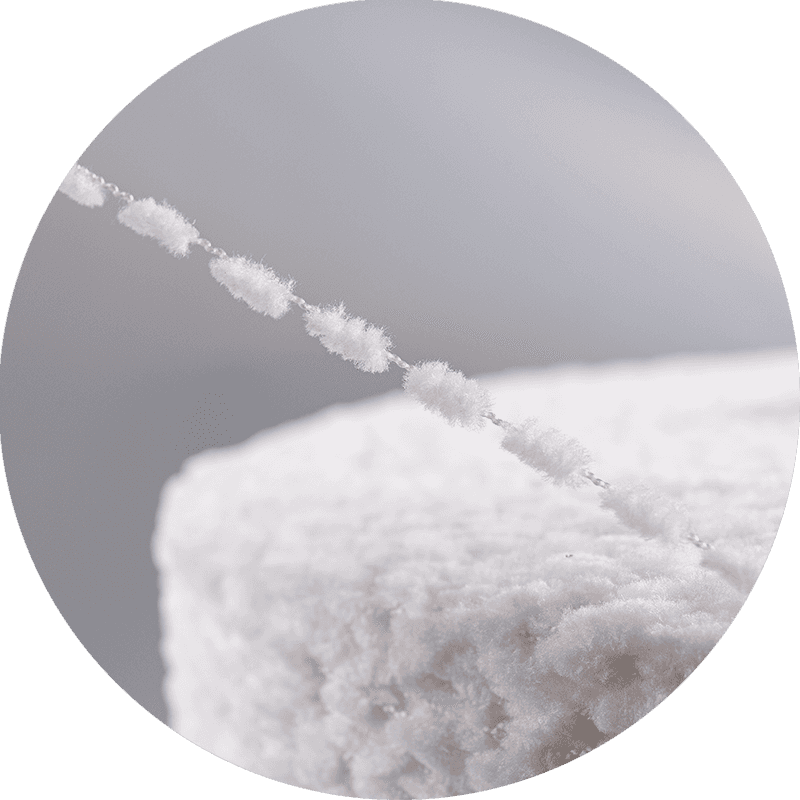
After extrusion, the filament passes through a drawing process that stretches it to align internal polymer chains, increasing tensile strength and elasticity. This step directly influences how well the finished bristle springs back into shape after use rather than remaining bent or flattened.
Once cut to length, bristle tips undergo a rounding process that smooths sharp edges left from cutting. This step matters significantly for user comfort, since unrounded tips can irritate gums and enamel during regular brushing, and most quality oral care brands specify a minimum rounding standard for their bristle suppliers.
Not all toothbrush yarn performs the same way once tufted into a finished brush. Several measurable properties determine how a bristle feels and functions during use.
Toothbrush yarn is typically categorized by diameter, measured in millimeters, which directly correlates to how firm or soft the finished bristle feels. The table below outlines common ranges used across different product types.
| Diameter Range | Firmness Level | Typical Use |
| 0.15mm–0.18mm | Extra Soft | Sensitive gums, children's brushes |
| 0.19mm–0.20mm | Soft | Standard adult brushes |
| 0.21mm–0.23mm | Medium | General purpose brushing |
| 0.25mm and above | Firm | Specialty and interdental brushes |
Beyond standard round filament, manufacturers have developed several variations to address specific cleaning needs or marketing differentiation in the oral care market.
Tapered bristles are ground to a finer point at the tip while remaining thicker at the base, allowing better access to tight spaces between teeth while maintaining structural durability where the bristle meets the brush head.
Some toothbrush yarn is treated with antibacterial additives incorporated during the extrusion process, reducing bacterial growth on bristles between uses. This treatment has become increasingly common in premium oral care products marketed for hygiene-conscious consumers.
Manufacturers sourcing toothbrush yarn typically request samples and test batches before committing to large orders, since even small variations in diameter consistency or tip rounding can affect finished product quality and customer satisfaction. Requesting documentation on rounding ratio and tensile strength testing helps buyers verify that a supplier's yarn meets consistent standards across production runs.
Working with suppliers who provide detailed technical specifications and batch testing reports ultimately reduces the risk of quality issues appearing after tufting, when correcting a bristle problem becomes far more costly than catching it at the raw material stage.

Copyright © Tongxiang Xinsili Textile Co., Ltd. All Rights Reserved. Wholesale High Filament DTY Yarn Manufacturers
